
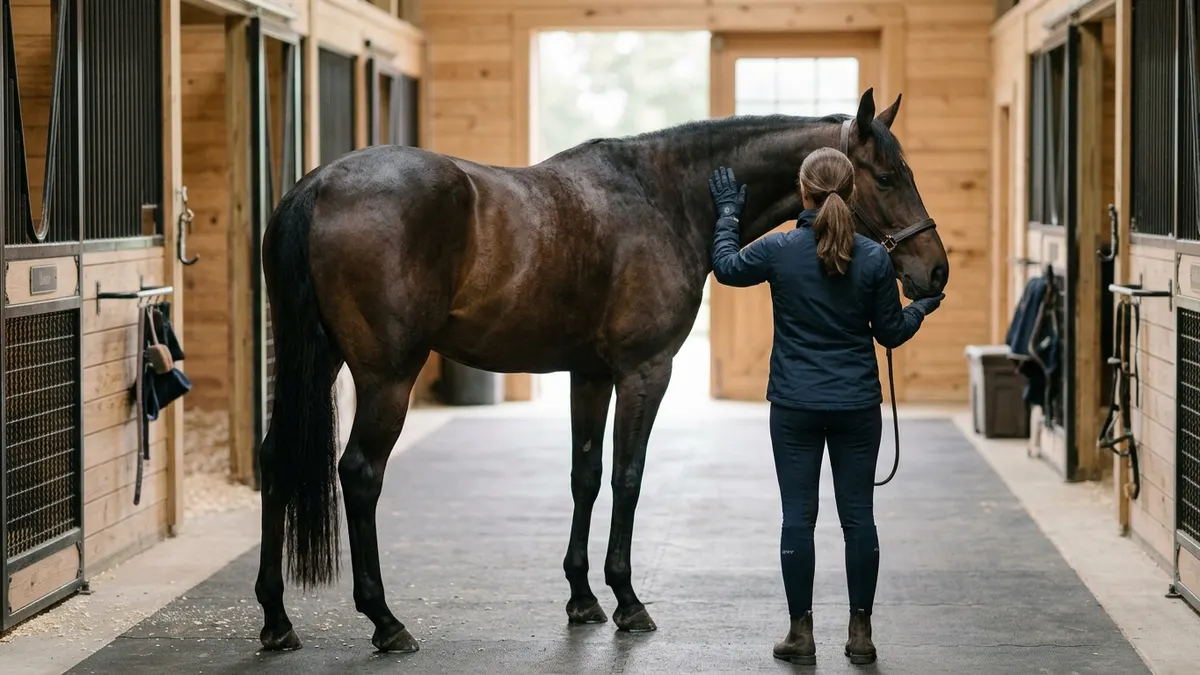
Vet Handling Preparation
Practice touch, neck holds, mouth checks and standing before appointments.
Goal
Practice touch, neck holds, mouth checks and standing before appointments.
Equipment
- well-fitted halter
- lead rope
- gloves
- safe enclosed area
Before you start
Rule out pain or equipment problems, choose non-slip footing and decide what a small success will look like before the session.
Session plan
body touch
Focus on body touch. Ask for one clear response at a time, release or reward promptly, then repeat only while the horse remains able to think. End this stage when the response is calm and predictable rather than merely completed once.
neck
Focus on neck. Ask for one clear response at a time, release or reward promptly, then repeat only while the horse remains able to think. End this stage when the response is calm and predictable rather than merely completed once.
mouth
Focus on mouth. Ask for one clear response at a time, release or reward promptly, then repeat only while the horse remains able to think. End this stage when the response is calm and predictable rather than merely completed once.
mock injection touch
Focus on mock injection touch. Ask for one clear response at a time, release or reward promptly, then repeat only while the horse remains able to think. End this stage when the response is calm and predictable rather than merely completed once.
stand
Focus on stand. Ask for one clear response at a time, release or reward promptly, then repeat only while the horse remains able to think. End this stage when the response is calm and predictable rather than merely completed once.
Success criteria
The horse can repeat the behavior with a light cue, low tension and a quick return to relaxation.
If you get stuck
Lower the difficulty: reduce distance, duration or distraction. Reward the smallest correct try, then finish on an easy repetition.
Stop and reassess if
fear escalates, the horse becomes unsafe, behavior changes suddenly, or pain and equipment fit have not been ruled out.
How to progress
Change one variable at a time: duration, distance, environment or distraction. Repeat easy successes, record what triggered tension and move forward only when the horse can stay soft, attentive and recover quickly.