
Horse Hoof Care Schedule: Farrier Visits, Daily Checks and Red Flags
Build a hoof routine that catches cracks, thrush, loose shoes and soreness early
HorseTation Editorial Team · Last updated 2026-09-02Pick feet regularly
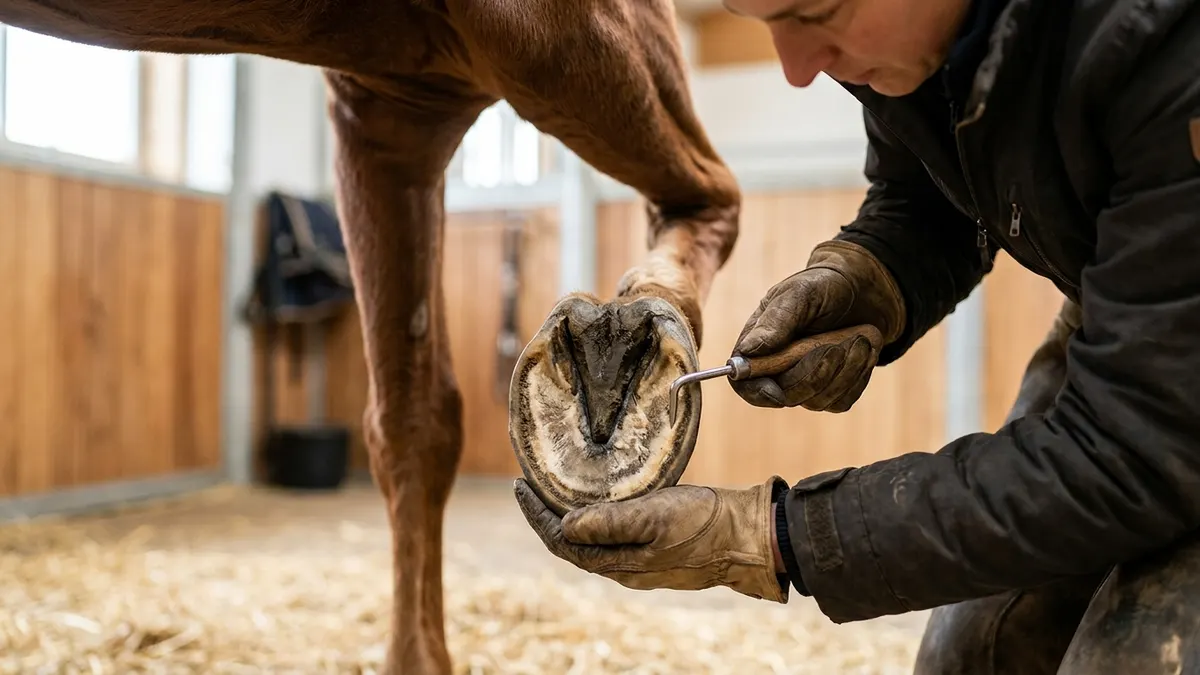
Daily handling lets you see stones, odor, black discharge, heat or a sprung shoe before they become bigger problems.
Farrier interval is individual
Growth rate, season, workload, footing and whether the horse is shod or barefoot all influence the schedule.
Balance matters
Long toes, underrun heels or mediolateral imbalance can affect comfort and performance; discuss patterns with your farrier and veterinarian.
Know urgent signs
A suddenly very lame horse, nail puncture or strong digital pulse deserves prompt professional assessment.
Nutrition supports hoof growth
But supplements cannot correct a poor trim, uncontrolled disease or an unbalanced total ration.
Build a repeatable routine
Use the same inspection order each day: attitude, appetite, water, manure, skin, limbs, feet, tack areas and movement. Repetition makes subtle changes easier to notice.
Common mistakes to avoid
Do not let a cosmetic grooming goal hide pain, swelling, heat, rubs or foot problems. Equipment and schedules should fit the individual horse, climate and workload.
References & further reading
These references support the subject and do not imply endorsement of HorseTation.
- AAEP — Horse Owner Resource Library — American Association of Equine Practitioners
- University of Minnesota Extension — Horse Nutrition — University of Minnesota Extension