
Horse Dental Care: What Owners Should Schedule and Watch For
A practical overview of dental exams, chewing signs, quidding and feed changes
HorseTation Editorial Team · Last updated 2026-09-02Dental needs change with age
Young horses, mature adults and seniors can have different eruption, wear and missing-tooth issues.
Signs between exams
Dropping feed, quidding, slow eating, weight loss, foul odor, nasal discharge or resistance to the bit can justify earlier assessment.
Floating is not the whole exam
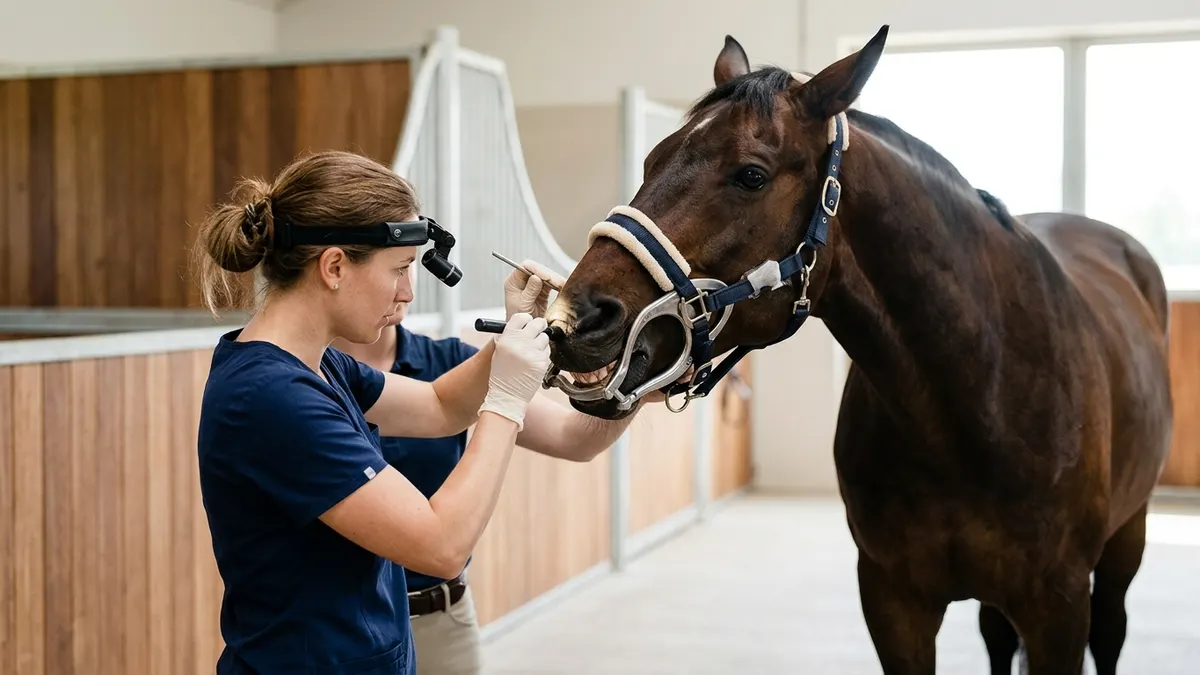
A complete dental evaluation may include sedation, a speculum and systematic inspection rather than simply rasping sharp points.
Senior feeding may need adaptation
Poor dentition can change the safest forage format. Soaked fiber feeds may become useful under professional guidance.
Keep records
Note findings and recommended recheck intervals so dental care becomes proactive.
Build a repeatable routine
Use the same inspection order each day: attitude, appetite, water, manure, skin, limbs, feet, tack areas and movement. Repetition makes subtle changes easier to notice.
Common mistakes to avoid
Do not let a cosmetic grooming goal hide pain, swelling, heat, rubs or foot problems. Equipment and schedules should fit the individual horse, climate and workload.
References & further reading
These references support the subject and do not imply endorsement of HorseTation.
- AAEP — Introduction to Equine Dentistry — American Association of Equine Practitioners