What Can Horses Not Eat?
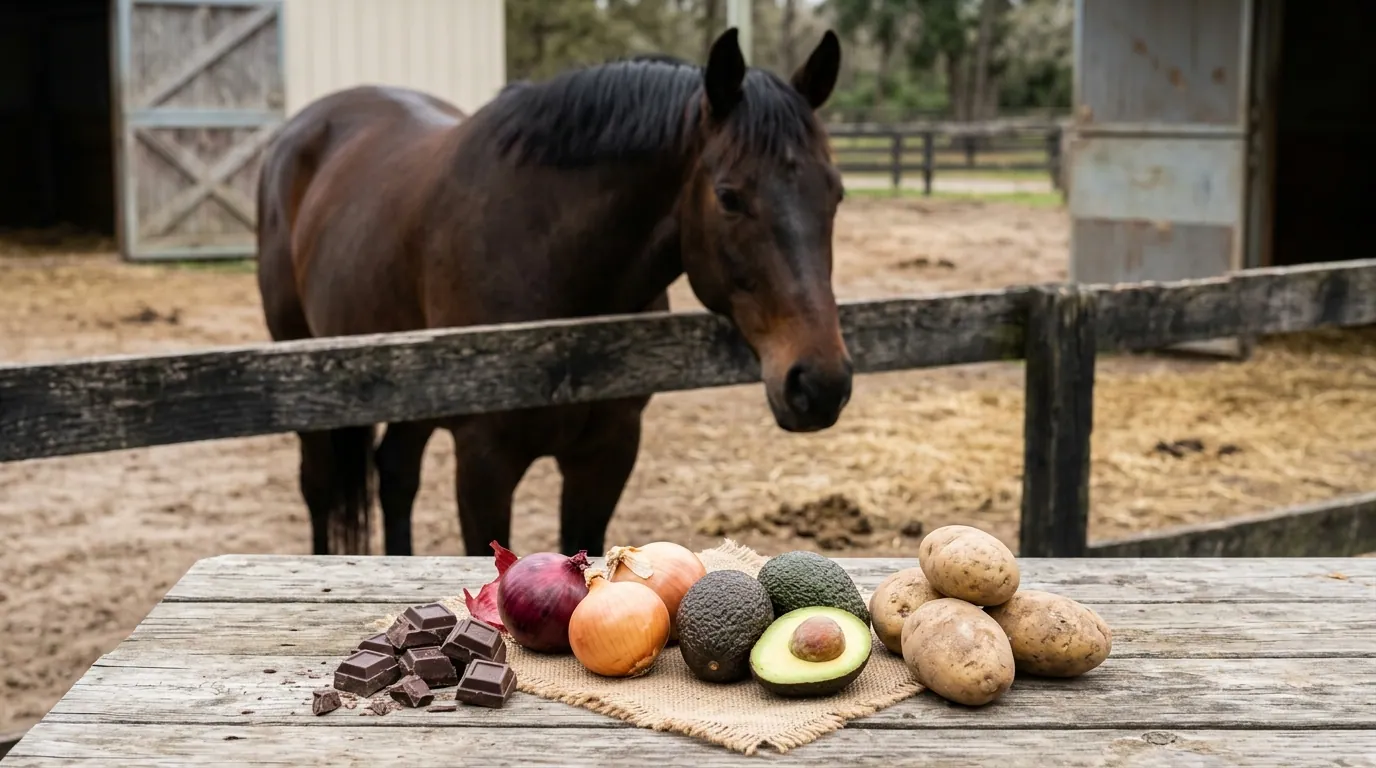
Several garden plants and human foods are unsuitable or dangerous for horses, and not everything safe for people is safe for equines.
HorseTation Editorial Team · Last updated 2026-10-13Short answer
Several garden plants and human foods are unsuitable or dangerous for horses, and not everything safe for people is safe for equines. Keep yew, oleander, ragwort, red maple wilted leaves, tomato plants, raw lawn clippings, chocolate and moldy hay away from horses. Seek veterinary advice immediately after suspected toxic-plant ingestion.
How to serve it safely
Forage and clean water must remain the daily priority. Wash fresh produce, discard spoiled food, cut it to a size suitable for the individual horse, and introduce new treats in small amounts. Never feed salted, pickled or seasoned versions.
Which horses need extra caution
Treats require extra care for horses with insulin dysregulation, equine metabolic syndrome, laminitis risk, dental disease or a history of choke. A veterinarian or equine nutritionist can advise whether this item fits the individual ration.
When to call the vet
Call your veterinarian if you observe cough with feed coming from nostrils, difficulty swallowing, colic behavior, unusual sweating, marked diarrhea or signs of toxicity. Do not attempt to force water or feed into a horse that may be choking.
Further reading
Research-based guidance: https://extension.psu.edu/trick-or-treat-things-to-think-about-when-giving-your-horse-a-treat ; https://extension.umn.edu/agriculture/animals-and-livestock/horse/ten-things-you-should-know-about-feeding-the-mature-horse ; https://esc.rutgers.edu/ask-the-expert/