
Winter Horse Care: Forage, Water, Mud and Shelter
Prepare for cold weather without assuming every horse needs the same blanket or calories
HorseTation Editorial Team · Last updated 2026-09-02Forage produces heat
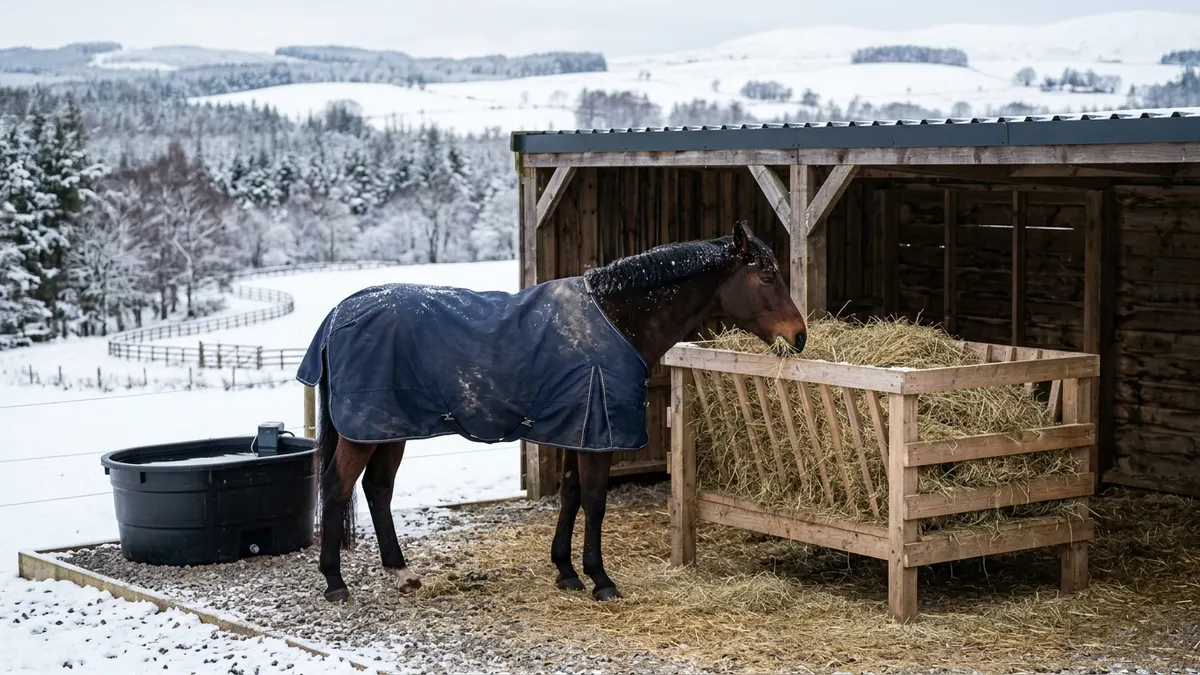
Digesting fiber supports thermoregulation, so adequate forage is central in cold conditions.
Frozen water reduces intake
Check troughs and buckets repeatedly; ice-free does not always mean comfortably drinkable.
Mud affects feet and skin
Rotate high-traffic areas, improve drainage where possible and inspect pasterns regularly.
Shelter changes comfort
Windbreaks and dry standing areas can be more important than air temperature alone.
Reassess body condition
Winter coats hide weight loss and gain; hands-on scoring is essential.
Turn the guide into a ration check
Weigh forage rather than judging by flakes, keep changes gradual, record body condition and workload, and use forage analysis when diet precision matters. Concentrates should solve a defined nutritional need rather than simply add calories.
Common mistakes to avoid
Avoid abrupt feed changes, guessing scoop weights, allowing long unplanned fasting periods, or treating supplements as substitutes for a balanced ration and veterinary or nutrition advice.
References & further reading
These references support the subject and do not imply endorsement of HorseTation.
- University of Minnesota Extension — Horse Nutrition — University of Minnesota Extension
- University of Minnesota Extension — Selecting and Storing Horse Hay — University of Minnesota Extension
- AAEP — Horse Owner Resource Library — American Association of Equine Practitioners