
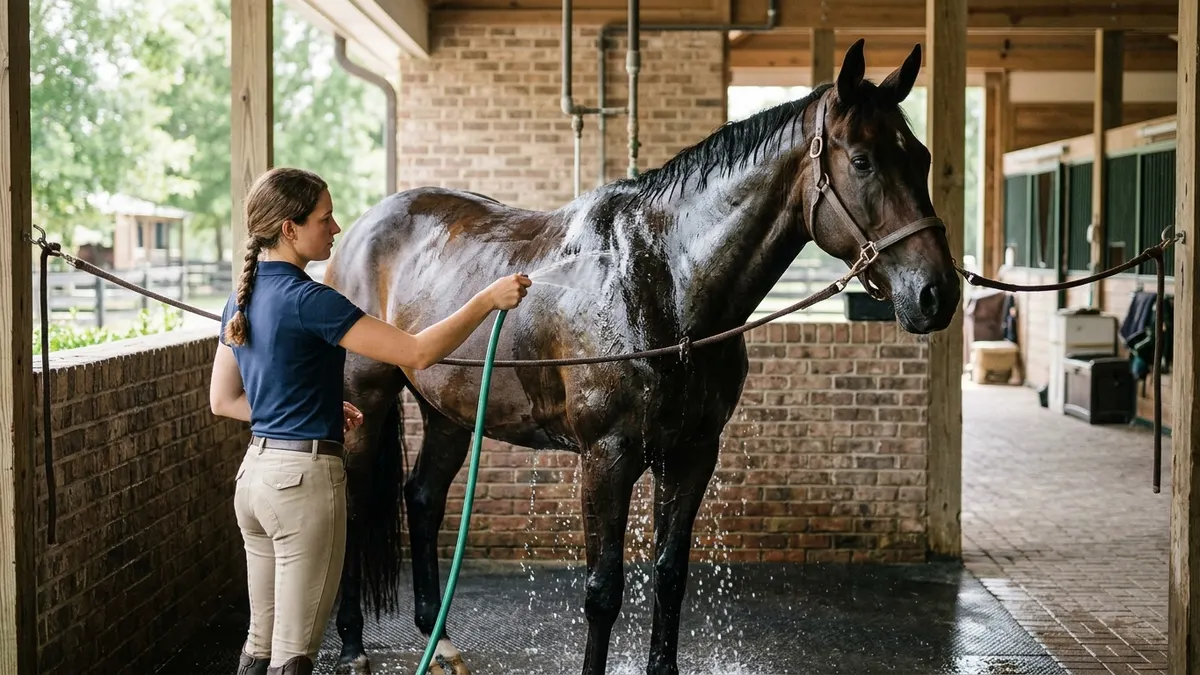
Heat Stress in Horses: Hydration, Cooling and Red Flags
A practical summer guide for exercise, shade, water and emergency cooling
HorseTation Editorial Team · Last updated 2026-09-02Heat plus humidity matters
Evaporative cooling becomes less efficient as humidity rises.
Watch recovery
A horse that remains very hot, weak, disoriented or distressed after stopping work needs urgent attention.
Cool aggressively when needed
Continuous cool water with scraping only when it helps ongoing application is often more effective than delaying cooling.
Provide water
Healthy horses generally benefit from access to water; follow veterinary advice for specific medical situations.
Acclimatize gradually
Fitness and heat acclimation reduce risk but never eliminate it.
What to record before you call
Write down when the change started, appetite, water intake, manure, temperature if you can take it safely, medications, travel and any recent feed or routine change. A short timeline gives your veterinarian more useful information than a long list of guesses.
Common mistakes to avoid
Do not delay a veterinary call because one vital sign looks normal, do not give prescription medication from another horse, and do not force exercise when pain, neurologic signs, breathing difficulty or severe lameness are present.
References & further reading
These references support the subject and do not imply endorsement of HorseTation.
- AAEP — Horse Owner Resource Library — American Association of Equine Practitioners
- University of Minnesota Extension — Horse Nutrition — University of Minnesota Extension