
Equine Biosecurity for New Arrivals and Show Horses
Simple habits that reduce infectious-disease spread at barns and events
HorseTation Editorial Team · Last updated 2026-09-02Separate when practical
New or returning horses may need a defined observation or quarantine plan.
Do not share everything
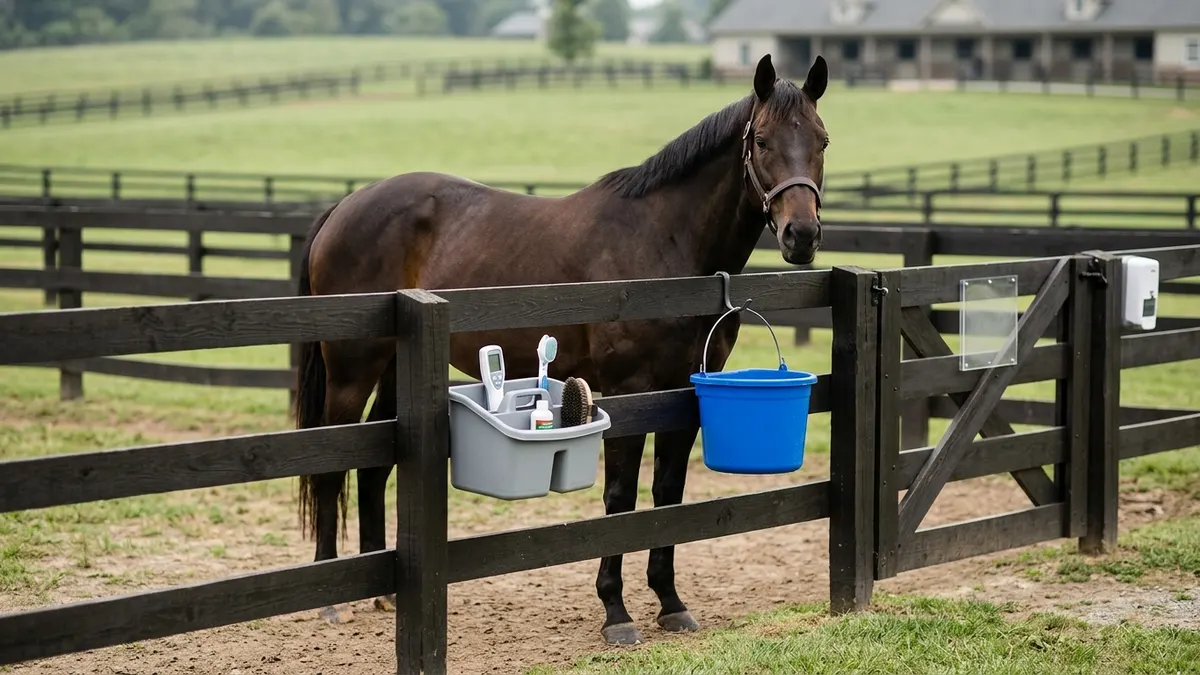
Buckets, thermometers, grooming tools and tack can carry contamination.
Temperature logs are useful
A daily temperature can reveal illness before obvious signs appear in higher-risk settings.
Traffic matters
People, trailers and equipment move pathogens as well as horses do.
Have an isolation trigger
Know what signs mean the horse stops sharing airspace and equipment while you call the vet.
Plan before the problem
Write down who makes decisions, who can transport the horse, which clinic you would use, where records are kept and what supplies travel with the horse. Good management reduces time lost during a real problem.
Common mistakes to avoid
Avoid copying another barn’s schedule without adjusting for climate, disease risk, pasture, workload and the horse’s age and medical history.
References & further reading
These references support the subject and do not imply endorsement of HorseTation.
- USDA APHIS — Biosecurity Tips for Horse Owners — USDA APHIS
- AAEP — Equine Vaccination Guidelines — American Association of Equine Practitioners