
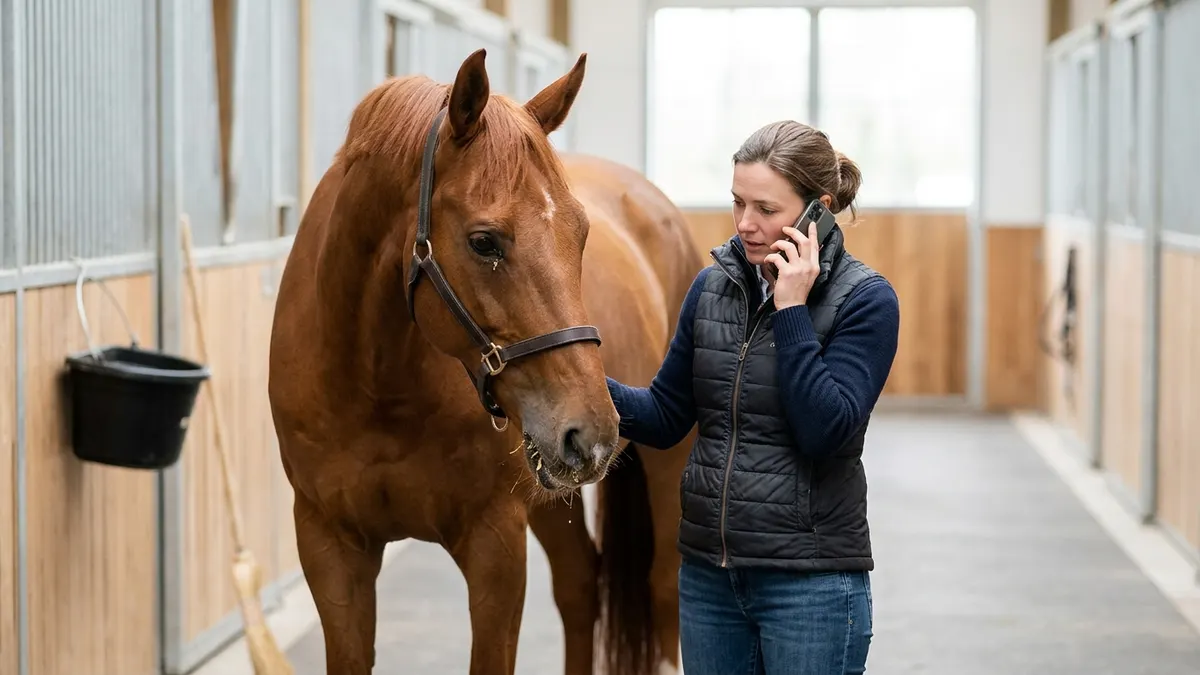
Horse Choke: What It Looks Like and What Owners Should Do
Recognize esophageal obstruction and avoid dangerous home remedies
HorseTation Editorial Team · Last updated 2026-09-02Choke in horses is not airway choking
The airway may remain open, but feed and saliva can come from the nostrils and the horse can become distressed.
Stop feed and water
Remove access and call a veterinarian. Do not force water, oil or feed into the mouth.
Aspiration is a concern
Material entering the lungs can lead to pneumonia, so follow-up matters even after the obstruction resolves.
Reduce recurrence
Dental disease, rapid eating and dry feeds can contribute. Your vet can help identify prevention steps.
Some feeds need preparation
Soaking or slowing intake may be recommended for horses with previous episodes.
What to record before you call
Write down when the change started, appetite, water intake, manure, temperature if you can take it safely, medications, travel and any recent feed or routine change. A short timeline gives your veterinarian more useful information than a long list of guesses.
Common mistakes to avoid
Do not delay a veterinary call because one vital sign looks normal, do not give prescription medication from another horse, and do not force exercise when pain, neurologic signs, breathing difficulty or severe lameness are present.
References & further reading
These references support the subject and do not imply endorsement of HorseTation.
- Merck Veterinary Manual — Colic in Horses — Merck Veterinary Manual
- AAEP — Horse Owner Resource Library — American Association of Equine Practitioners