
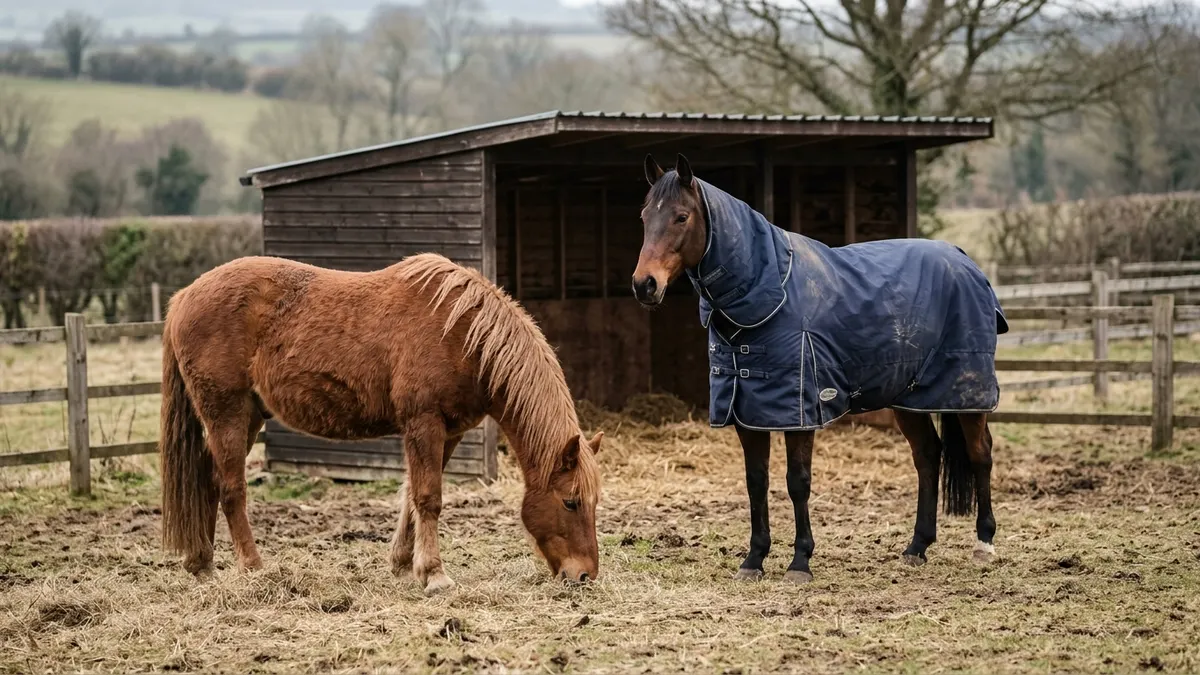
Horse Blanketing Guide: When a Blanket Helps—and When It Does Not
Use coat, weather, shelter, body condition and clipping status instead of a one-temperature rule
HorseTation Editorial Team · Last updated 2026-09-02The natural coat is effective
Healthy unclipped horses with shelter can tolerate cold surprisingly well when dry and adequately fed.
Clipping changes insulation
A body-clipped horse may need protection sooner, especially in wind and rain.
Wet plus wind is different
Water compresses the coat and increases heat loss. Shelter and waterproof protection can matter.
Check under the blanket
Sweating, rubs and trapped moisture are signs the setup needs adjustment.
Body condition matters
Thin, senior or ill horses may need a different plan from healthy easy keepers.
Build a repeatable routine
Use the same inspection order each day: attitude, appetite, water, manure, skin, limbs, feet, tack areas and movement. Repetition makes subtle changes easier to notice.
Common mistakes to avoid
Do not let a cosmetic grooming goal hide pain, swelling, heat, rubs or foot problems. Equipment and schedules should fit the individual horse, climate and workload.
References & further reading
These references support the subject and do not imply endorsement of HorseTation.
- AAEP — Horse Owner Resource Library — American Association of Equine Practitioners
- University of Minnesota Extension — Horse Nutrition — University of Minnesota Extension