
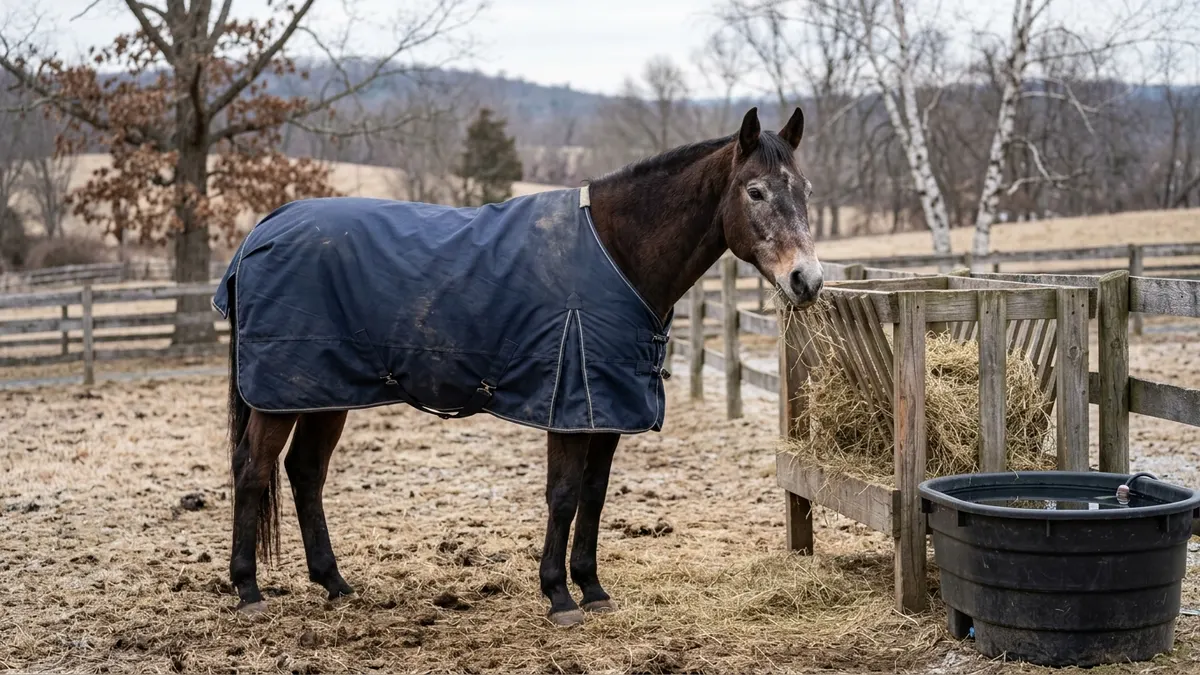
Senior Horse Care: Weight, Teeth, Mobility and Winter Planning
A proactive guide for older horses whose needs are changing
HorseTation Editorial Team · Last updated 2026-09-02Age is not a diagnosis
Some horses remain active into their twenties while others need earlier adaptations.
Track weight and topline
Monthly photos and weight estimates help catch decline before ribs become obvious through a winter coat.
Dental function changes feeding
Senior complete feeds and soaked fiber can help horses that cannot chew long-stem forage adequately.
Movement still matters
Appropriate turnout and gentle exercise can support mobility when pain is controlled.
Plan winter early
Older horses may need shelter, blankets, more digestible calories and closer water monitoring.
Build a repeatable routine
Use the same inspection order each day: attitude, appetite, water, manure, skin, limbs, feet, tack areas and movement. Repetition makes subtle changes easier to notice.
Common mistakes to avoid
Do not let a cosmetic grooming goal hide pain, swelling, heat, rubs or foot problems. Equipment and schedules should fit the individual horse, climate and workload.
References & further reading
These references support the subject and do not imply endorsement of HorseTation.
- AAEP — Horse Owner Resource Library — American Association of Equine Practitioners
- University of Minnesota Extension — Horse Nutrition — University of Minnesota Extension