
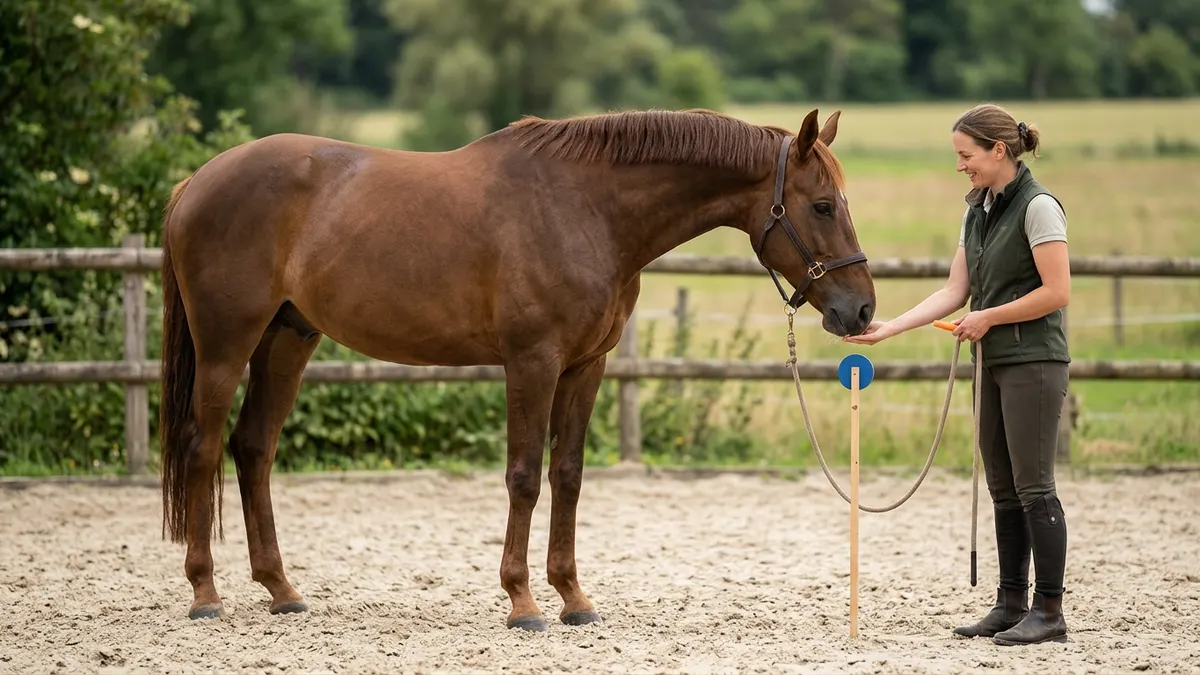
Reward-Based Horse Training: Timing, Pressure and Release Without Force Escalation
A practical framework for clearer, lower-conflict learning
HorseTation Editorial Team · Last updated 2026-09-02Clarity beats intensity
Horses learn from consistent consequences. Escalating pressure without a plan can create fear rather than understanding.
Release is information
When using pressure-and-release, remove pressure promptly when the horse offers the desired response.
Food can be used thoughtfully
Positive reinforcement can be powerful when delivery, manners and safety are trained deliberately.
Break tasks into pieces
Trailer loading, clipping and farrier work become easier when the horse can succeed at smaller approximations.
Behavior can reflect pain
Sudden resistance, aggression or performance changes should not automatically be labeled a training problem.
Measure relaxation, not just completion
A useful training result is repeatable at low tension. Track breathing, posture, ability to pause, response to light cues and how quickly the horse returns to baseline after a new challenge.
Common mistakes to avoid
Do not make the task harder in several ways at once. If behavior changes suddenly, rule out pain, equipment fit and environmental stress before assuming the horse needs stronger pressure.
References & further reading
These references support the subject and do not imply endorsement of HorseTation.
- AAEP — Horse Owner Resource Library — American Association of Equine Practitioners
- University of Minnesota Extension — Horse Nutrition — University of Minnesota Extension