
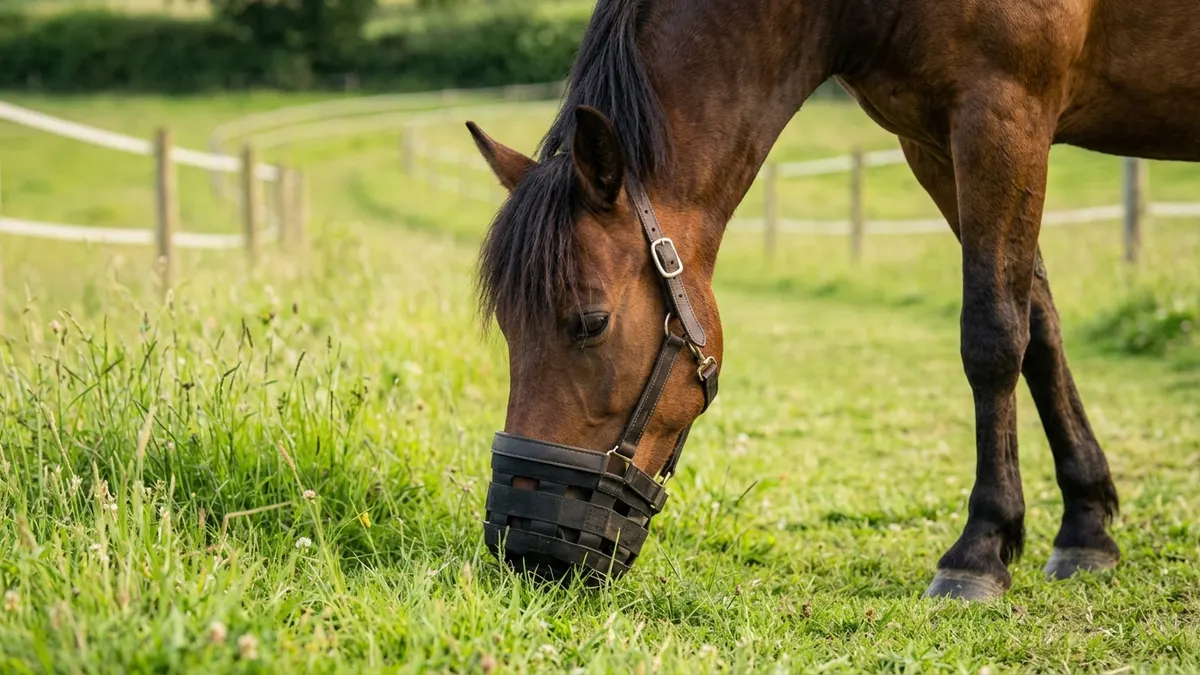
Pasture Management for Easy Keepers
Reduce excess calorie intake without eliminating movement, forage or social needs
HorseTation Editorial Team · Last updated 2026-09-02Grass is not “free food”
Pasture sugar and energy vary with season, weather, plant maturity and time of day.
Use body condition to guide access
Grazing muzzles, track systems, dry lots and timed turnout can help when used humanely.
Do not create long fasting periods
Horses are designed for frequent forage intake. Restriction plans should protect gastrointestinal and behavioral welfare.
Exercise adds value
When sound and vet-approved, regular movement improves fitness and can support metabolic health.
Test when risk is high
Horses with regional adiposity or previous laminitis may need veterinary assessment for insulin dysregulation or PPID.
Turn the guide into a ration check
Weigh forage rather than judging by flakes, keep changes gradual, record body condition and workload, and use forage analysis when diet precision matters. Concentrates should solve a defined nutritional need rather than simply add calories.
Common mistakes to avoid
Avoid abrupt feed changes, guessing scoop weights, allowing long unplanned fasting periods, or treating supplements as substitutes for a balanced ration and veterinary or nutrition advice.
References & further reading
These references support the subject and do not imply endorsement of HorseTation.
- University of Minnesota Extension — Horse Nutrition — University of Minnesota Extension
- University of Minnesota Extension — Selecting and Storing Horse Hay — University of Minnesota Extension
- University of Minnesota Extension — Managing Established Horse Pastures — University of Minnesota Extension
- University of Minnesota Extension — Planning Your Horse Pasture Site — University of Minnesota Extension