
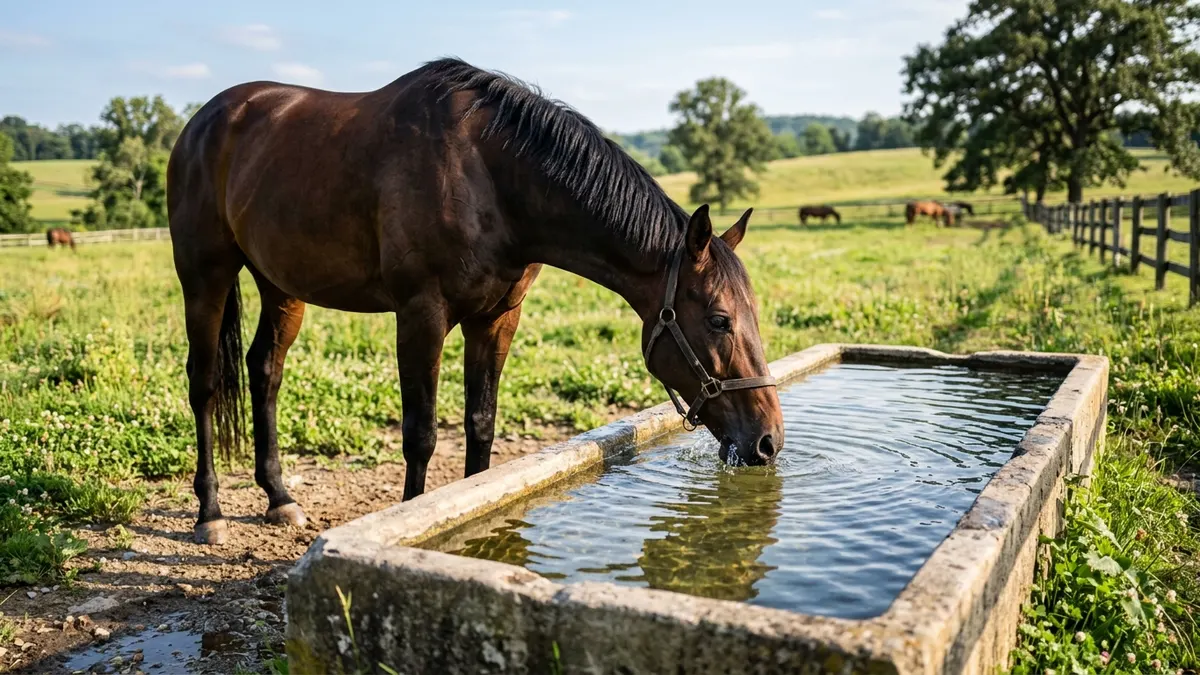
Horse Water Intake: What Is Normal and What Changes It?
Understand daily water needs and the factors that can sharply increase them
HorseTation Editorial Team · Last updated 2026-09-02There is no single normal number
Body size, temperature, workload, lactation, feed moisture and salt intake all change demand.
Measure when possible
Buckets, trough meters or marked containers can help you notice a change before dehydration becomes obvious.
Winter still matters
Some horses drink less when water is very cold. Heated or tempered water can improve intake where safe and practical.
Sweat changes the equation
Hard work in heat increases both water and electrolyte losses. Replacement plans should match actual workload and veterinary/nutrition guidance.
Sudden changes deserve attention
A sharp increase or decrease can signal management problems or illness and may warrant veterinary evaluation.
Turn the guide into a ration check
Weigh forage rather than judging by flakes, keep changes gradual, record body condition and workload, and use forage analysis when diet precision matters. Concentrates should solve a defined nutritional need rather than simply add calories.
Common mistakes to avoid
Avoid abrupt feed changes, guessing scoop weights, allowing long unplanned fasting periods, or treating supplements as substitutes for a balanced ration and veterinary or nutrition advice.
References & further reading
These references support the subject and do not imply endorsement of HorseTation.
- University of Minnesota Extension — Horse Nutrition — University of Minnesota Extension
- University of Minnesota Extension — Selecting and Storing Horse Hay — University of Minnesota Extension