
How Much Hay Should a Horse Eat? A Forage-First Planning Guide
Use body weight, dry matter and body condition to build a safer forage starting point
HorseTation Editorial Team · Last updated 2026-09-02Start with body weight
Forage plans should begin with a realistic weight estimate, not “one flake” or “one net.” Flake weights vary dramatically.
Think in dry matter
Many adult horses consume around 1.5–2% of body weight per day as forage dry matter, but individual needs vary. Weight loss, metabolic disease, pregnancy, growth and performance require individualized plans.
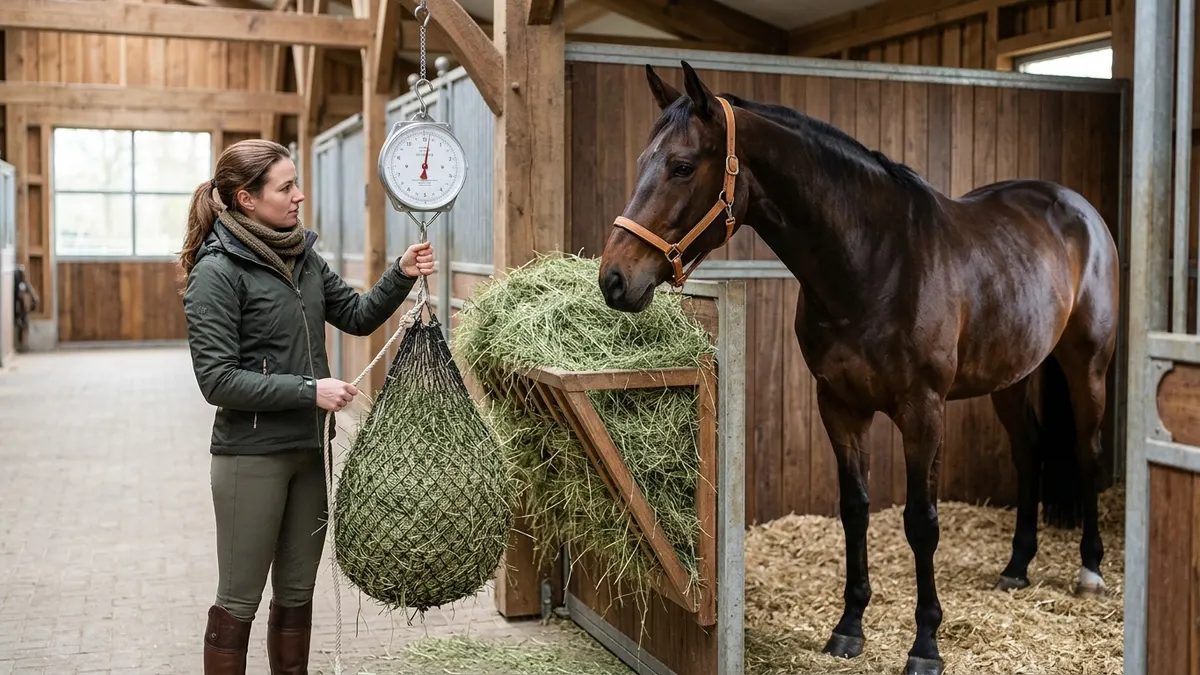
Weigh actual hay
A luggage or hanging scale can reveal whether your flakes are 1.5 kg or 4 kg. That difference is too large to guess.
Use body condition and trend
The correct ration keeps the horse at an appropriate body condition while supporting work, health and behavior. Reweigh or tape periodically.
Forage analysis adds precision
Sugar, protein, minerals and energy vary by cutting and field. A forage analysis makes supplement choices far more rational.
Turn the guide into a ration check
Weigh forage rather than judging by flakes, keep changes gradual, record body condition and workload, and use forage analysis when diet precision matters. Concentrates should solve a defined nutritional need rather than simply add calories.
Common mistakes to avoid
Avoid abrupt feed changes, guessing scoop weights, allowing long unplanned fasting periods, or treating supplements as substitutes for a balanced ration and veterinary or nutrition advice.
References & further reading
These references support the subject and do not imply endorsement of HorseTation.
- University of Minnesota Extension — Horse Nutrition — University of Minnesota Extension
- University of Minnesota Extension — Selecting and Storing Horse Hay — University of Minnesota Extension