
Hucul
For someone researching the Hucul, the useful starting point is not appearance but function: this pony / small horse from Carpathians is typically described as hardy and enduring, generally calm and sensible, agile and sure-footed and willing and versatile and is often chosen for Trail, Driving, Packing.
Owner overview
For someone researching the Hucul, the useful starting point is not appearance but function: this pony / small horse from Carpathians is typically described as hardy and enduring, generally calm and sensible, agile and sure-footed and willing and versatile and is often chosen for Trail, Driving, Packing.
Origin & breed context
The Hucul developed in Carpathians and is best understood in the context of its original job and the selection that followed. Today it is commonly associated with Trail, Driving, Packing. That history does not predict every individual, but it helps explain why owners often value the breed for hardy, sure-footed, calm and practical. Registry standards and breeding lines can differ, so use a breed profile as a starting point rather than a substitute for assessing the actual horse.
Build & type
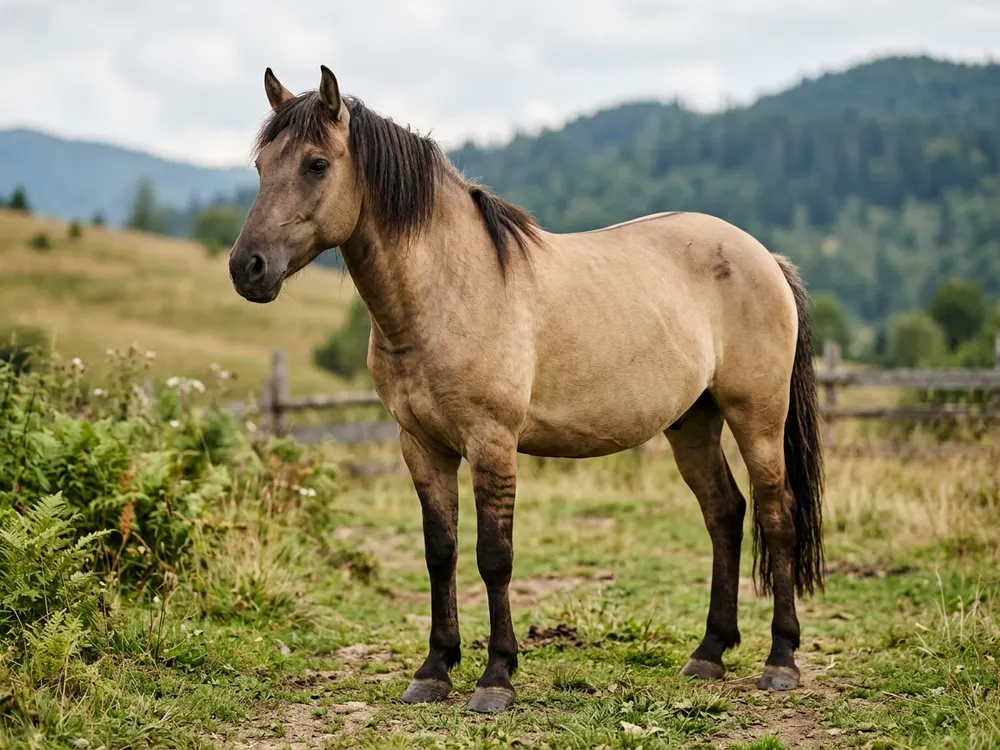
Typical breed presentation includes small Carpathian mountain horse, dun or bay, compact rugged frame. Conformation should be judged for functional balance, sound movement and suitability for the horse’s job rather than for one isolated feature.
Temperament & behavior
Expect an individual that may be hardy and enduring, generally calm and sensible, agile and sure-footed and willing and versatile. Use short, clear sessions, reward relaxation and do not turn sensitivity or independence into a contest. A new owner should evaluate the individual horse’s handling history as carefully as the breed label.
Activity & Training
Typical activity demand is Moderate. Build fitness around the horse’s real job—Trail, Driving, Packing—with progressive workload, varied surfaces and recovery. Sudden increases in distance, speed or jumping volume are a common management mistake.
Feeding & body condition
For Hucul, use the profile context—common roles: Trail, Driving, Packing; activity demand: Moderate—to decide whether forage alone is sufficient or whether a balanced concentrate is justified. Use weighed forage, controlled grazing when necessary and regular hands-on body-condition scoring. Avoid creating long fasting periods simply to reduce calories.
Grooming, hooves & health
Grooming demand is generally Moderate. Use grooming as a hands-on inspection of skin, limbs, back, girth area and feet. Hoof picking and farrier scheduling remain essential regardless of coat type.
For Hucul, management should reflect its real workload (Trail, Driving, Packing) and individual history rather than relying on breed stereotypes. Many pony and native types use calories efficiently. Keep hands-on body-condition checks in the routine and manage rich pasture thoughtfully rather than waiting for obvious obesity.
Management focus
The practical management priority for this breed is simple: A rugged type suited to varied terrain; careful weight control and regular hoof handling remain important. With an activity label of moderate and grooming demand of moderate, the useful question is not whether the breed is ‘easy’ or ‘hard’ but whether the owner can provide consistent turnout, hoof care, dental care, forage, training and recovery.
Owner fit
A good match for Hucul also depends on whether the owner can support a moderate activity profile and the horse’s intended work (Trail, Driving, Packing). Owners prepared to manage pasture and body condition carefully while still providing movement, social contact and enrichment.
A practical daily routine
For a Hucul, start each day with appetite, water, manure and attitude, then check legs and feet before work. Match exercise to the horse’s current conditioning for Trail, Driving, Packing, not to the breed’s reputation. After work, check recovery, sweat pattern, back and tack areas, and make notes when anything changes. Weekly body-condition and workload notes are more useful than relying on memory alone.
Before you buy or adopt
- See the Hucul caught, led, tied and handled on the ground.
- Watch the horse perform the job you actually want to do: Trail, Driving, Packing.
- Ask for veterinary, dental, farrier, medication and lameness history.
- Check how the horse behaves away from companions, in new environments and around loading if transport matters.
- Have tack fit and hoof balance evaluated when either is relevant to the intended workload.
- Arrange an independent pre-purchase veterinary examination appropriate to the horse’s age, value and intended use.
Before you choose this breed
Before buying or adopting, watch the horse being caught, led, tied, groomed, having feet handled, loaded if transport matters, and doing the job you expect. Ask for veterinary, dental and farrier history and budget for training help if your experience does not match the horse.
Questions owners ask
Is a Hucul suitable for a beginner?
Some individuals can be, but breed alone is not a safety test. Match the specific horse’s training, age and temperament to the rider.
How much exercise does a Hucul need?
Use moderate as a broad starting label, then adjust to age, soundness, turnout and the actual discipline.
What should I prioritize when feeding a Hucul?
For Hucul, use the profile context—common roles: Trail, Driving, Packing; activity demand: Moderate—to decide whether forage alone is sufficient or whether a balanced concentrate is justified. Use weighed forage, controlled grazing when necessary and regular hands-on body-condition scoring. Avoid creating long fasting periods simply to reduce calories.
What grooming or hoof-care detail matters most for a Hucul?
Grooming demand is generally Moderate. Use grooming as a hands-on inspection of skin, limbs, back, girth area and feet. Hoof picking and farrier scheduling remain essential regardless of coat type.