
Feed & Plant Safety
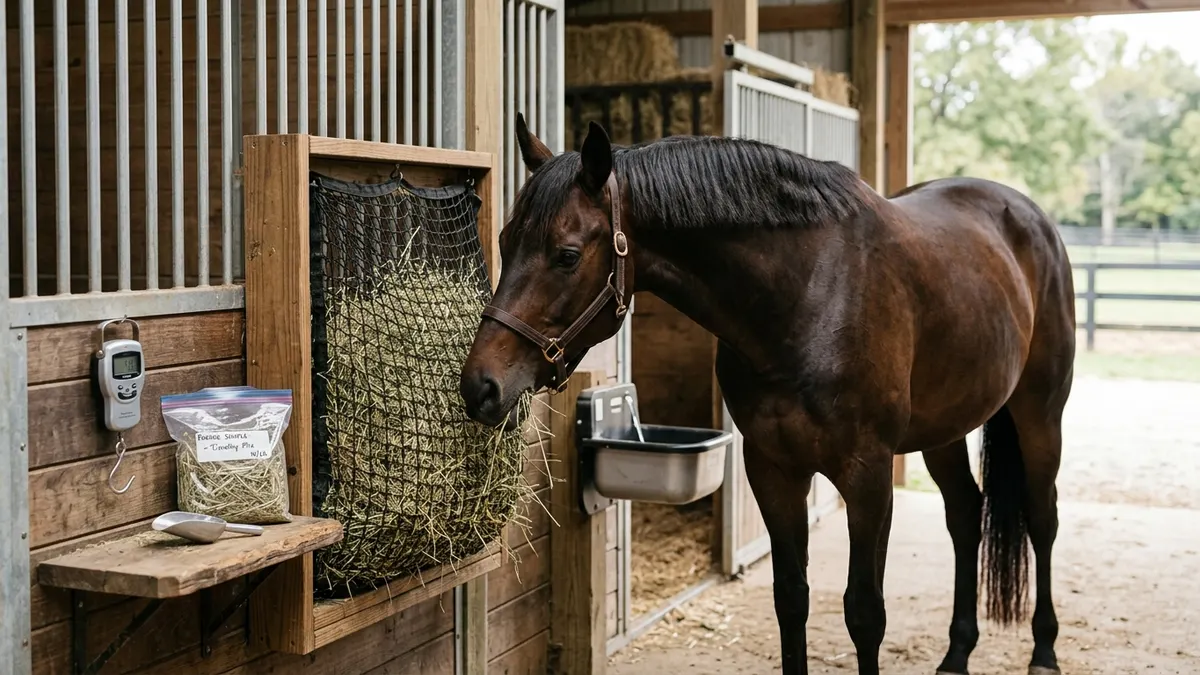
Can My Horse Eat This?
Search common treats, feeds and plants. Safety depends on dose, preparation and the individual horse.
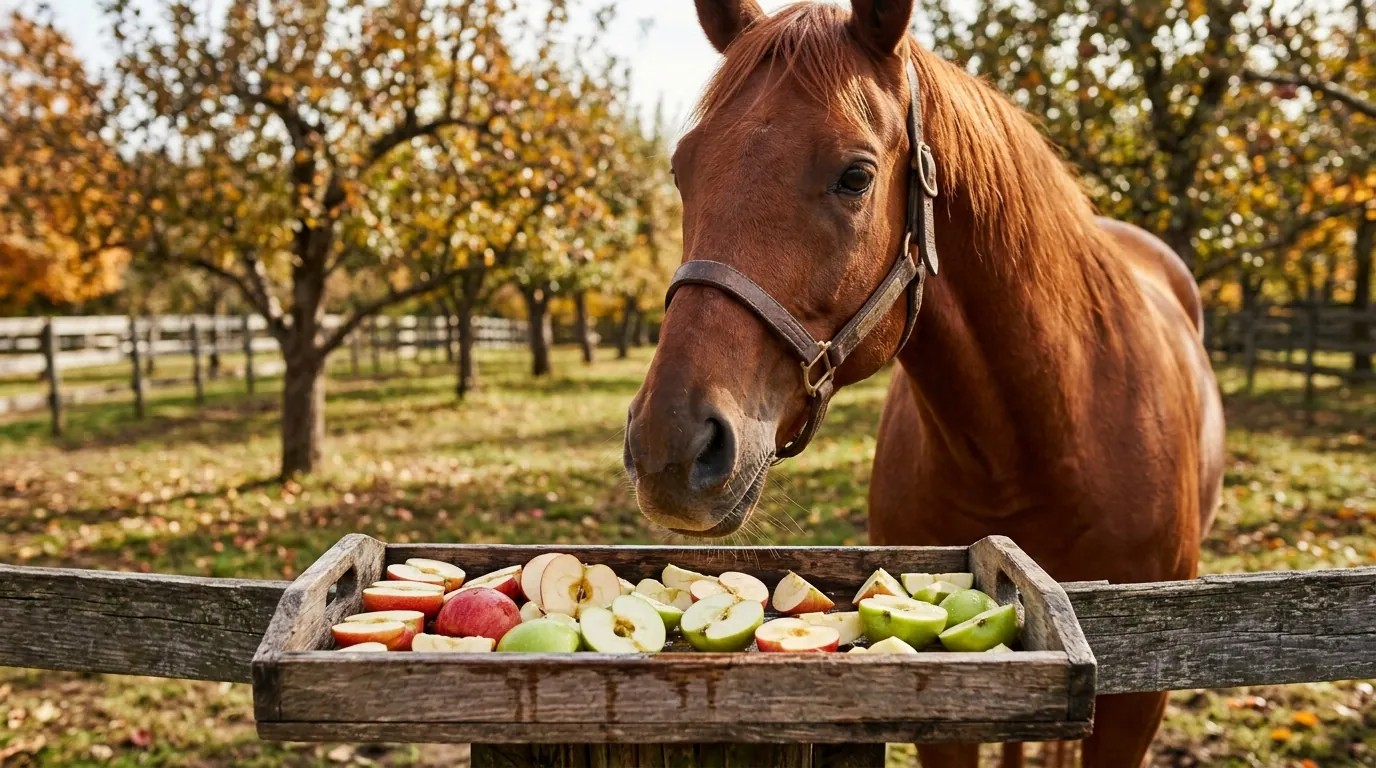
Apple
Generally suitable as an occasional treat
- Why it matters
- Cut into manageable pieces. Whole apples can be a choke risk for some horses; treats should not replace balanced forage.
- Serving guidance
- Remove the core if you cannot safely slice around it; serve thin wedges rather than handing over a whole apple. A few pieces suffice as a treat.
- What to do if eaten
- If a large apple piece lodges in the throat, stop feeding and contact a veterinarian immediately; coughing, nasal discharge and repeated attempts to swallow may signal choke.
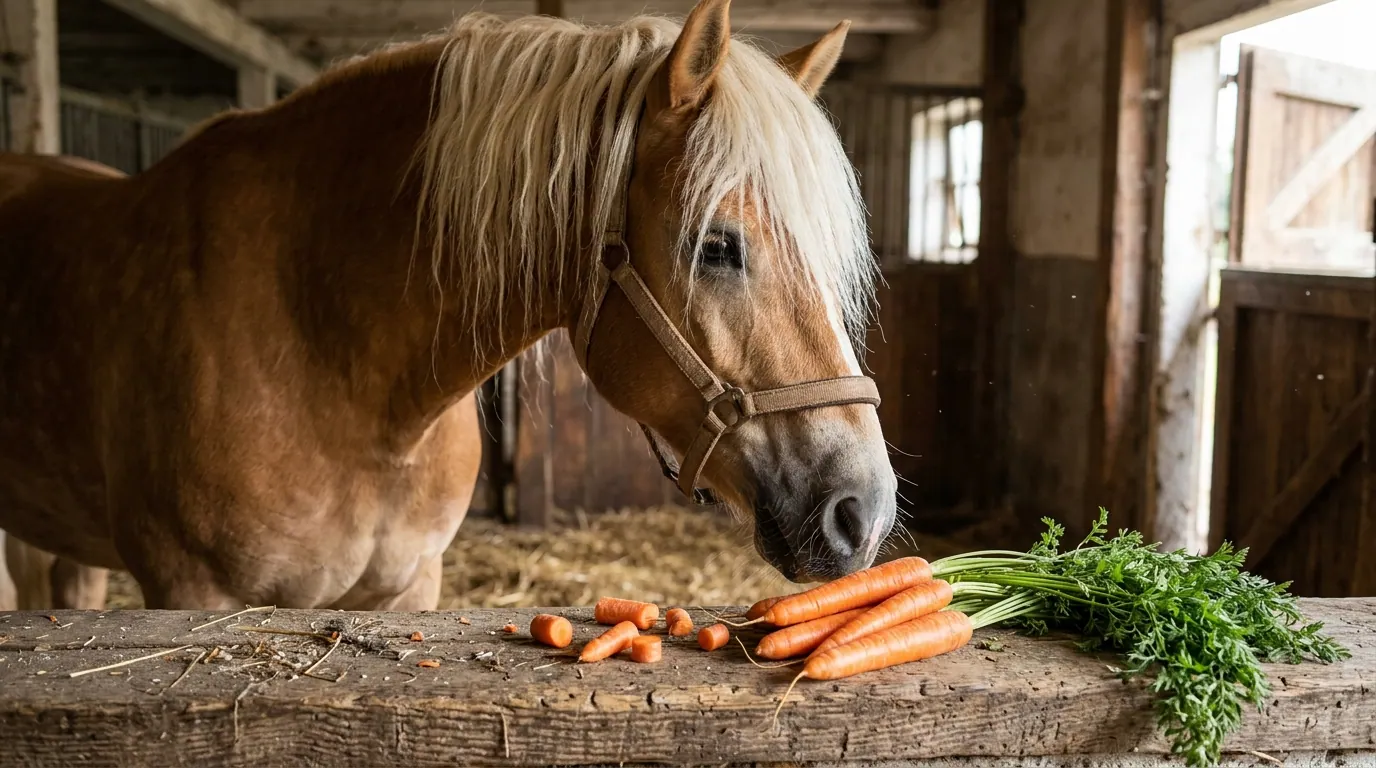
Carrot
Generally suitable in moderation
- Why it matters
- Slice lengthwise or into appropriate pieces for horses that bolt treats.
- Serving guidance
- Cut long carrots lengthwise into slender strips or small pieces; do not toss whole carrots to a horse that bolts its food.
- What to do if eaten
- After a swallowing problem, withhold further food and call the vet. Watch for drooling, feed from the nostrils or repeated neck stretching.
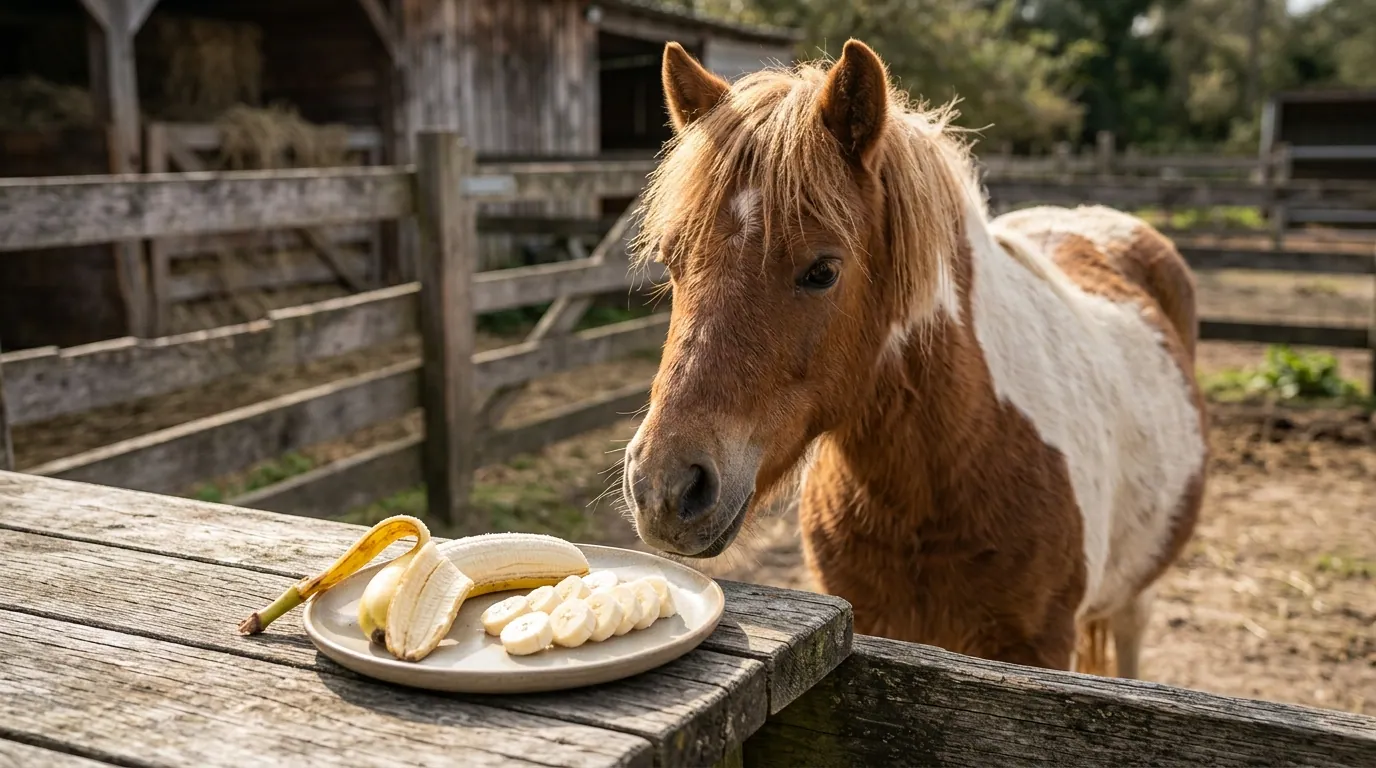
Banana
Generally suitable in small amounts
- Why it matters
- Peel is not usually necessary but many horses prefer the fruit; keep sugary treats limited.
- Serving guidance
- Offer a few soft banana slices, with the peel removed if the horse is unfamiliar with it. Limit portions for easy keepers and horses on sugar-restricted diets.
- What to do if eaten
- If a horse consumes several bananas and develops loose manure or abdominal discomfort, withhold treats and request veterinary advice.
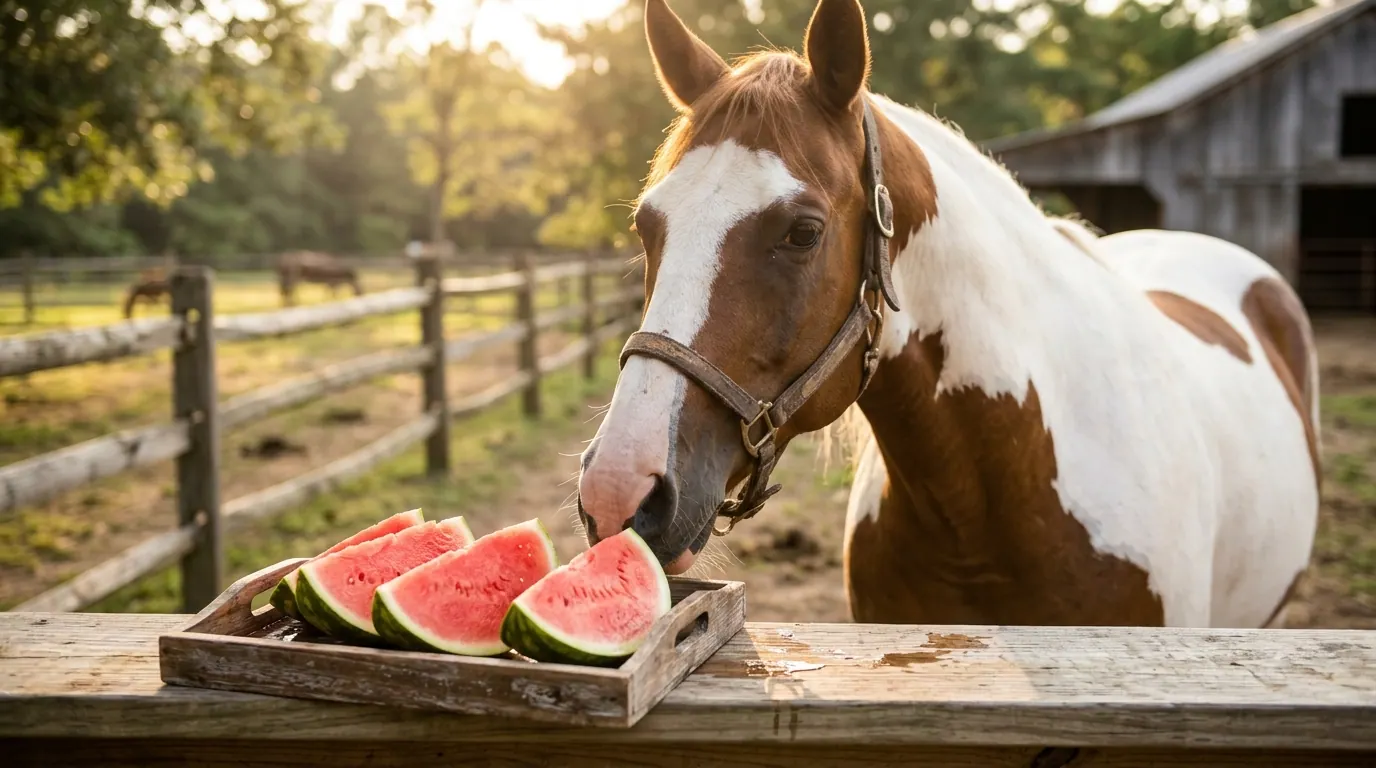
Watermelon
Small portions are generally acceptable
- Why it matters
- Remove large rind pieces if your horse gulps feed; keep treats modest.
- Serving guidance
- Choose fresh pink flesh and serve a few small chunks without oversized rind sections; discard any fermented fruit, and avoid making watermelon a daily sugar source.
- What to do if eaten
- If the horse raids a watermelon pile, check the amount eaten and monitor appetite, manure and signs of colic; call the veterinarian for discomfort or persistent changes.
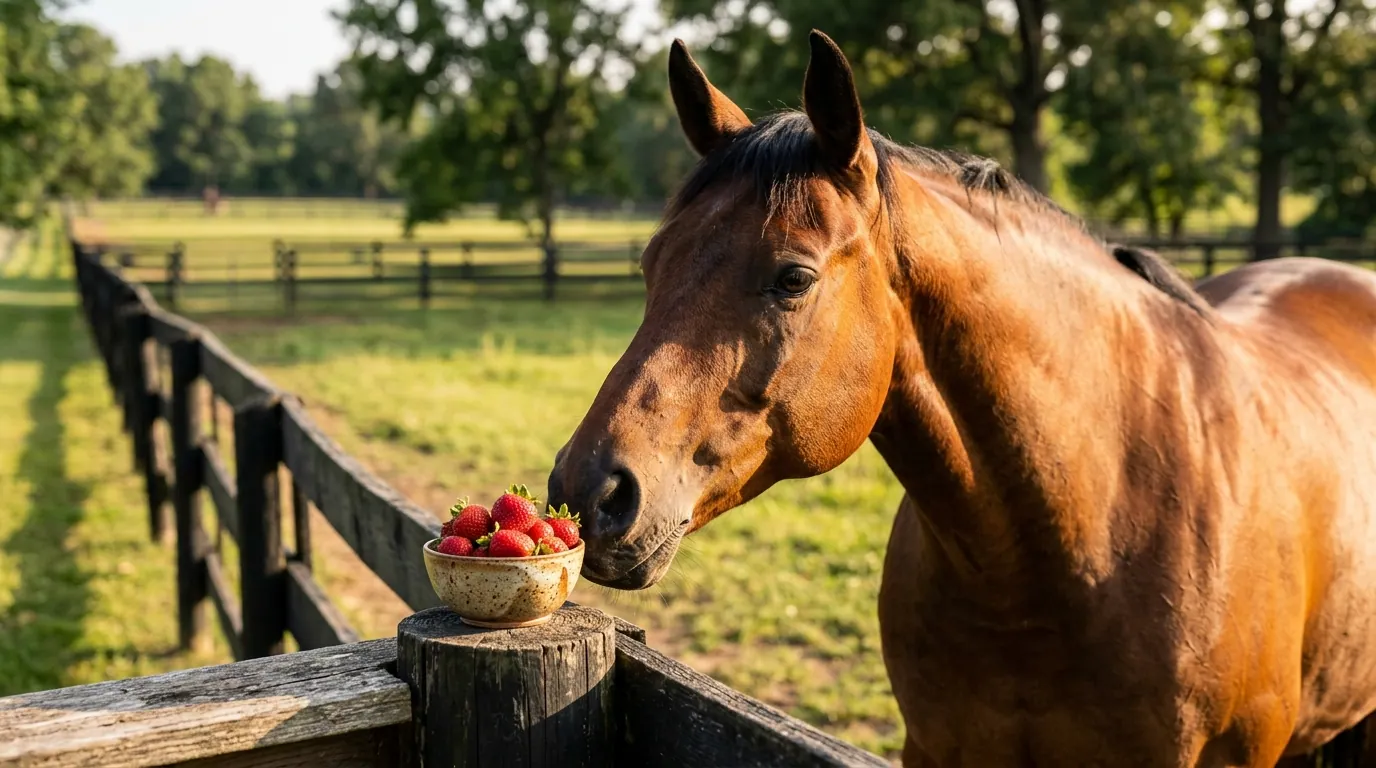
Strawberries
Generally suitable as an occasional treat
- Why it matters
- Wash, remove moldy or spoiled berries, and offer only a few at a time. Cut if needed for safe chewing.
- Serving guidance
- Rinse ripe strawberries, remove stems and soft or moldy fruit, then offer two or three small berries to start. Their sweetness makes them a treat, not a forage substitute.
- What to do if eaten
- Following an unexpected large berry feeding, watch for diarrhea or abdominal pain. If breathing or swallowing becomes difficult, seek urgent veterinary assistance.
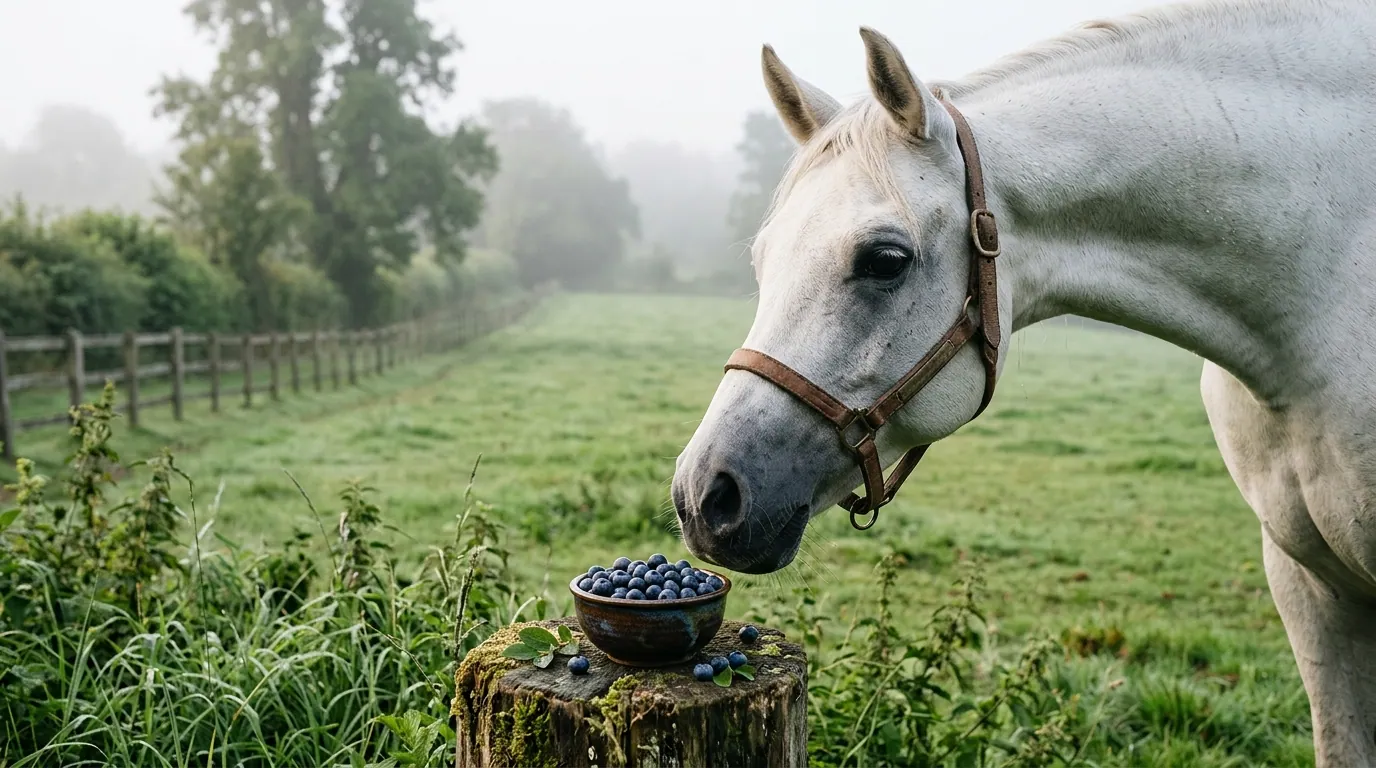
Blueberries
Generally suitable in small amounts
- Why it matters
- Offer washed blueberries as an occasional small treat; do not replace forage or feed very large amounts.
- Serving guidance
- Offer a small handful of washed, intact berries by hand or scattered in a feed pan. Avoid sweetened, dried or syrup-packed blueberry products.
- What to do if eaten
- If the horse eats a large quantity of berries, remove the remaining fruit and watch manure and behavior; consult your veterinarian if digestive symptoms appear.
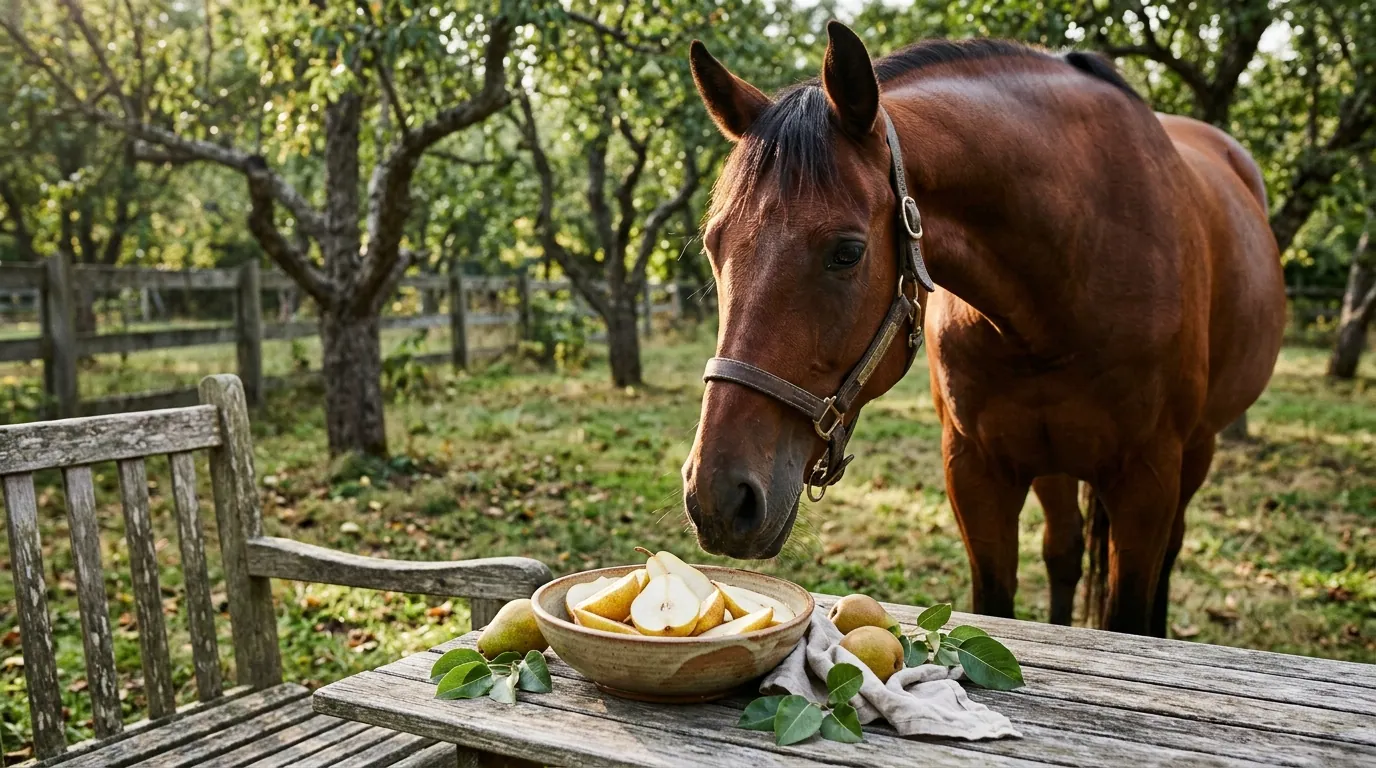
Pear
Generally suitable in moderation
- Why it matters
- Remove a very hard stem/core if needed and cut for horses prone to choke.
- Serving guidance
- Remove the hard stem and cut a ripe pear into narrow pieces; do not feed spoiled fruit or allow horses to gorge on windfalls under a tree.
- What to do if eaten
- A horse that has eaten fallen, fermenting pears may develop digestive upset; speak with your vet promptly if colic signs, depression or diarrhea appear.
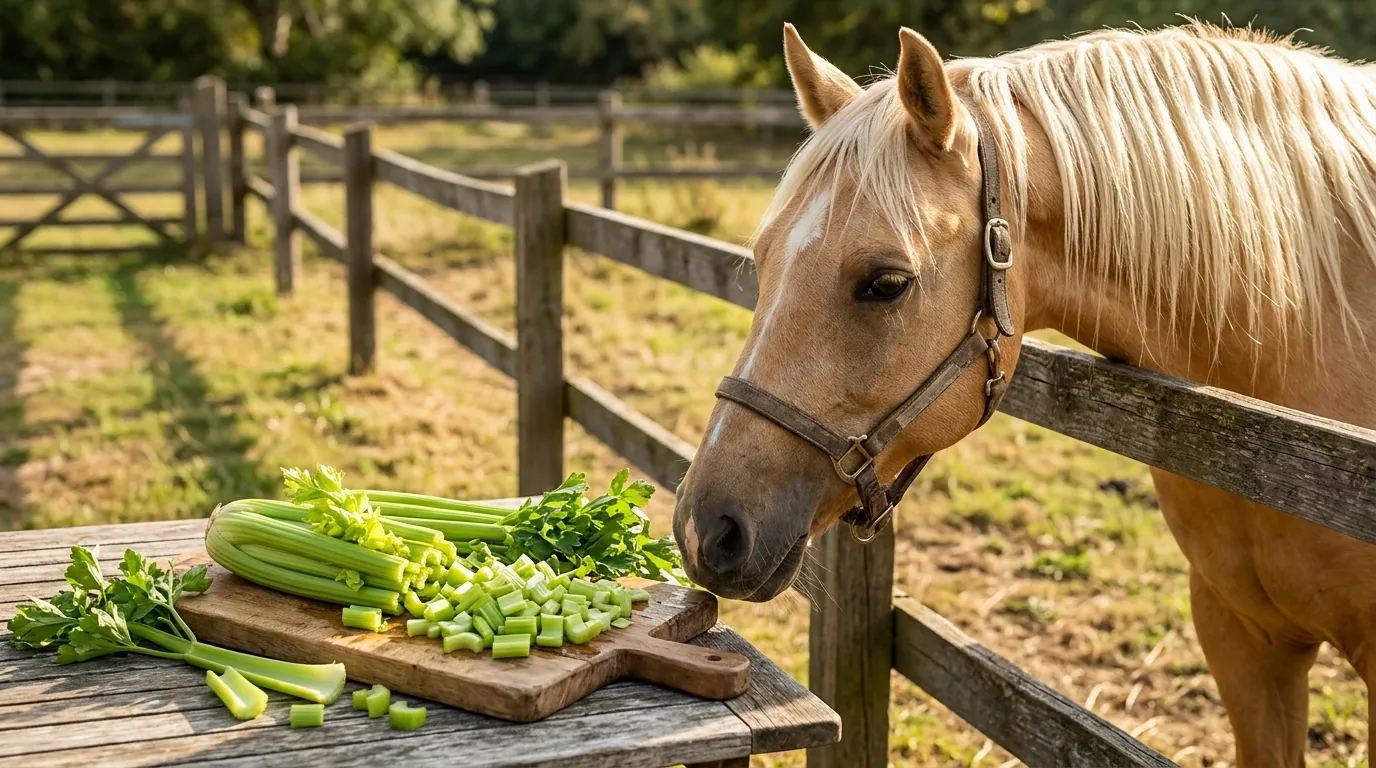
Celery
Generally suitable
- Why it matters
- Wash thoroughly; slice long, stringy stalks into short, manageable pieces for horses prone to choke.
- Serving guidance
- Wash the stalk thoroughly, trim damaged leaves and chop the fibrous ribs into short crosswise sections so strands are not swallowed as long ropes.
- What to do if eaten
- Persistent coughing, repeated swallowing or feed coming from the nose after celery requires immediate veterinary guidance because choke is possible.
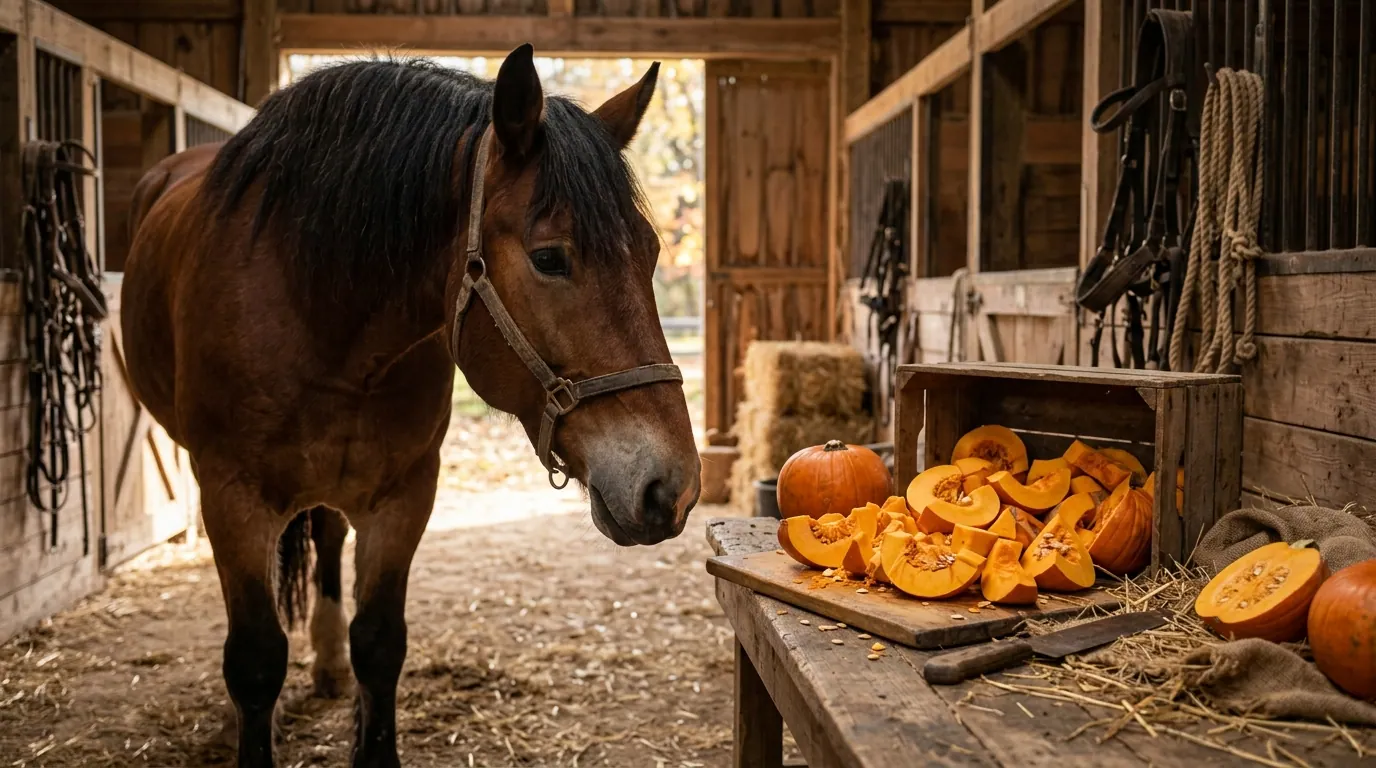
Pumpkin
Plain pumpkin flesh is generally suitable
- Why it matters
- Avoid moldy pumpkin and heavily spiced sweet preparations.
- Serving guidance
- Feed a little plain, fresh pumpkin flesh, diced into easy-to-chew pieces; remove the tough stem and avoid pumpkin pie filling, spices or sweeteners.
- What to do if eaten
- If a horse eats rotten pumpkin or large quantities of rind, ask a vet about the exposure and monitor for belly pain or changes in manure.
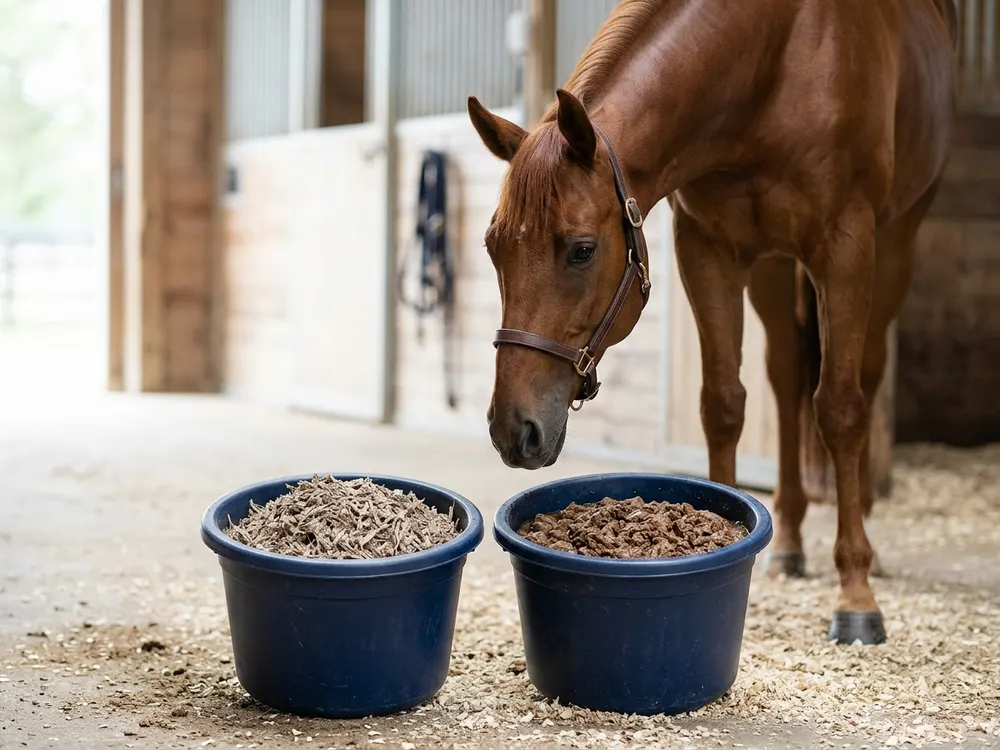
Beet Pulp
Common fiber feed when used appropriately
- Why it matters
- Use a reputable commercial product and follow soaking/feeding directions when recommended by the manufacturer or nutritionist.
- Serving guidance
- Use a plain equine beet-pulp product and follow its label for weighing, soaking if required and gradual introduction; do not assume all pellet formulations are identical.
- What to do if eaten
- If dry feed is rapidly consumed and choking is suspected, do not give more feed or water by mouth; contact the veterinarian. For ration imbalances, consult an equine nutritionist.
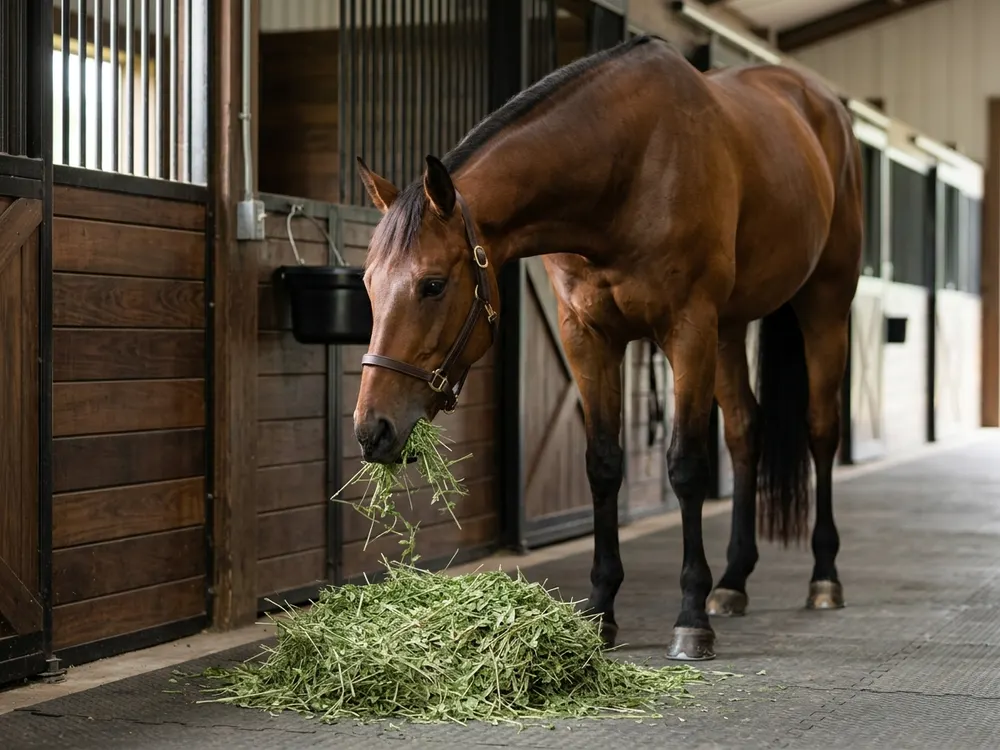
Alfalfa
Useful forage for many horses when it fits the ration
- Why it matters
- Higher protein and calcium than many grass hays; suitability depends on age, workload and total ration.
- Serving guidance
- Balance alfalfa with the horse’s full forage ration, workload and mineral needs. Transition gradually and use a forage analysis when alfalfa makes up a substantial share.
- What to do if eaten
- Unexpected loose manure or changes after a hay switch warrant reviewing forage quality and ration changes with the veterinarian or nutritionist.
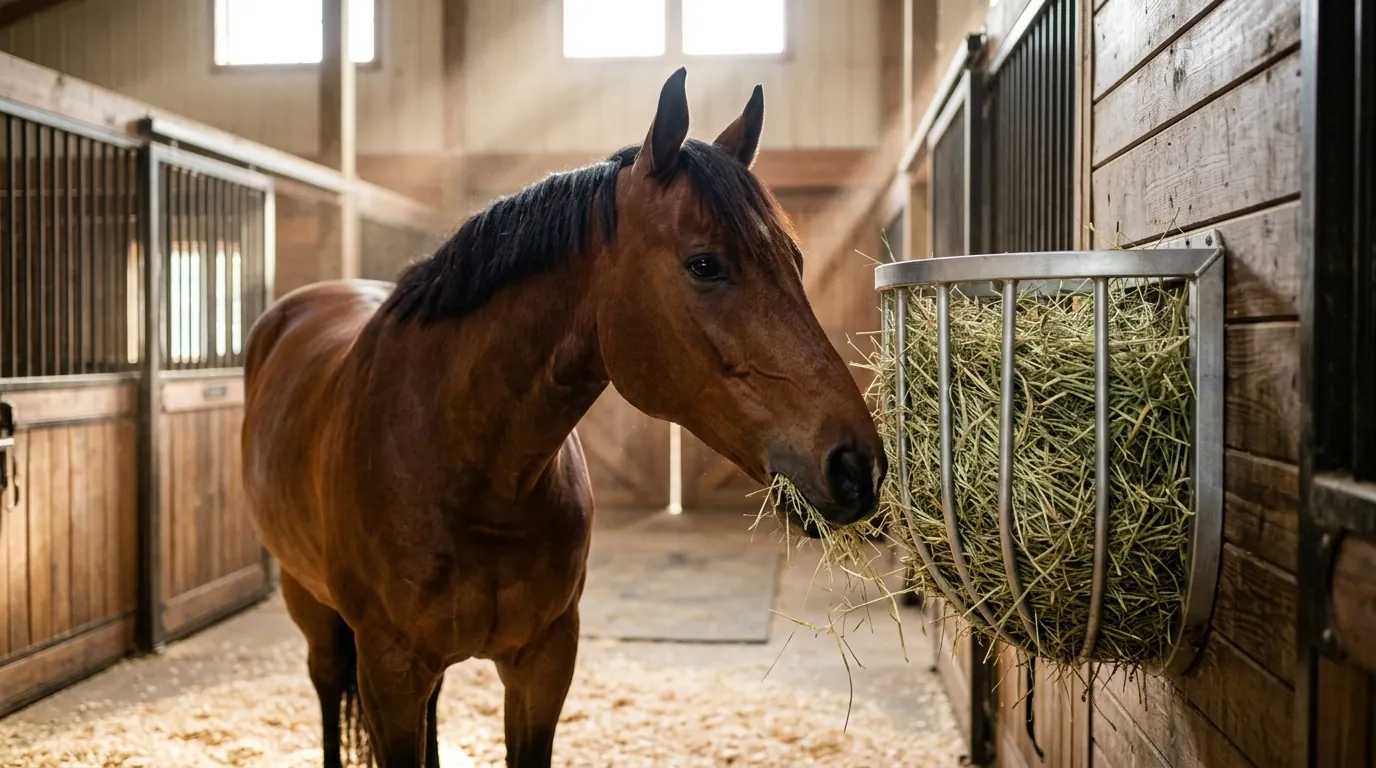
Grass Hay
Core forage for many horses
- Why it matters
- Quality, maturity, hygiene and nutrient content vary. Forage analysis is valuable when balancing a ration.
- Serving guidance
- Select clean, dry, dust-controlled grass hay matched to the horse’s body condition. Provide frequent forage access, and inspect each bale for heat, moisture and mold.
- What to do if eaten
- Stop feeding suspect bales if coughing or respiratory irritation begins; contact a veterinarian for breathing difficulty and replace contaminated forage.
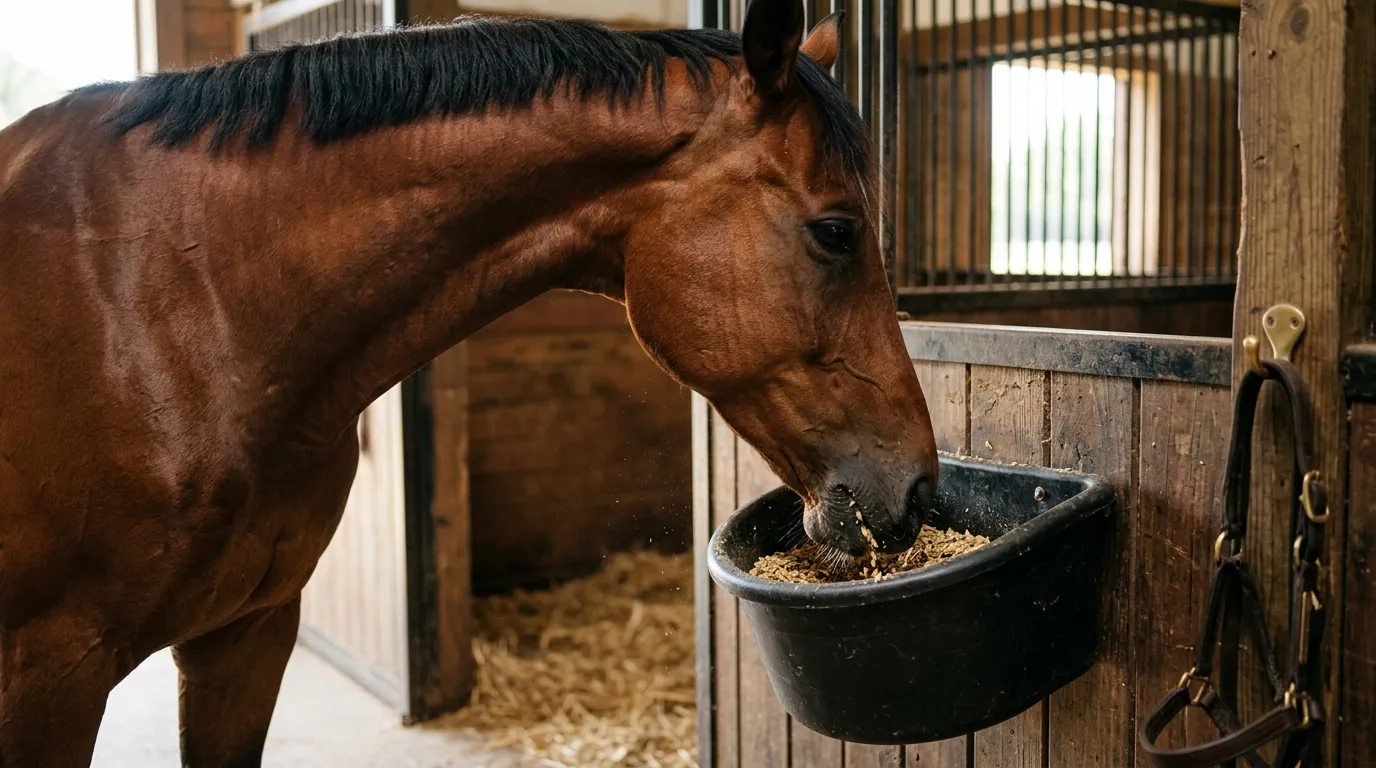
Oats
Common concentrate but not automatically appropriate
- Why it matters
- Starch and calories can exceed the needs of easy keepers or horses with metabolic issues. Balance the whole diet.
- Serving guidance
- Measure oats by weight rather than scoop volume, and add them only if the horse actually needs the calories. Concentrates should not crowd forage out of the ration.
- What to do if eaten
- If a horse breaks into the grain bin, treat it as urgent: call your veterinarian immediately because carbohydrate overload can lead to colic or laminitis.
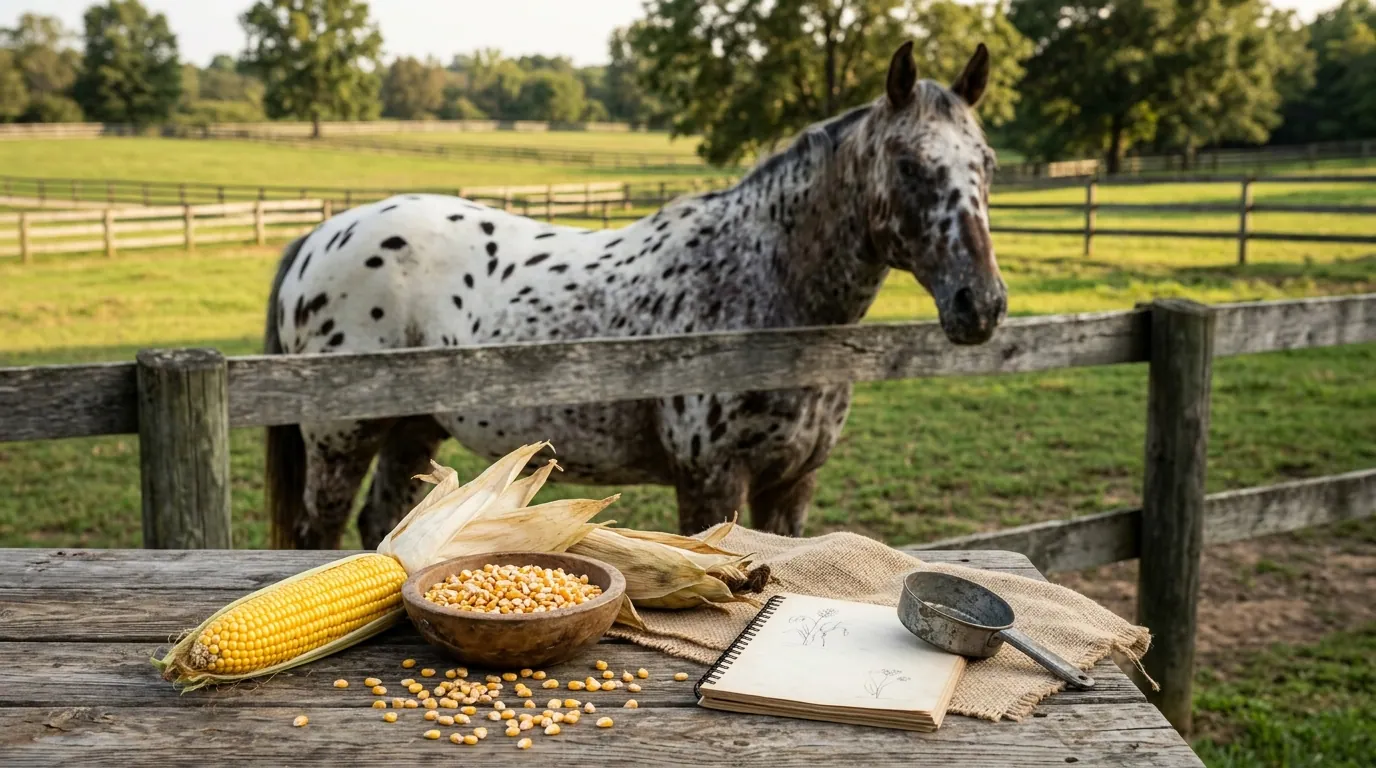
Corn
Energy-dense concentrate requiring careful use
- Why it matters
- High starch; should be processed and fed as part of a balanced ration, not free-fed.
- Serving guidance
- If prescribed in a balanced ration, use properly processed equine feed and introduce it slowly; whole-corn treats and unsupervised grain access are poor choices.
- What to do if eaten
- A grain-bin raid involving corn needs immediate veterinary advice, even if the horse initially looks normal; note the estimated quantity and time.
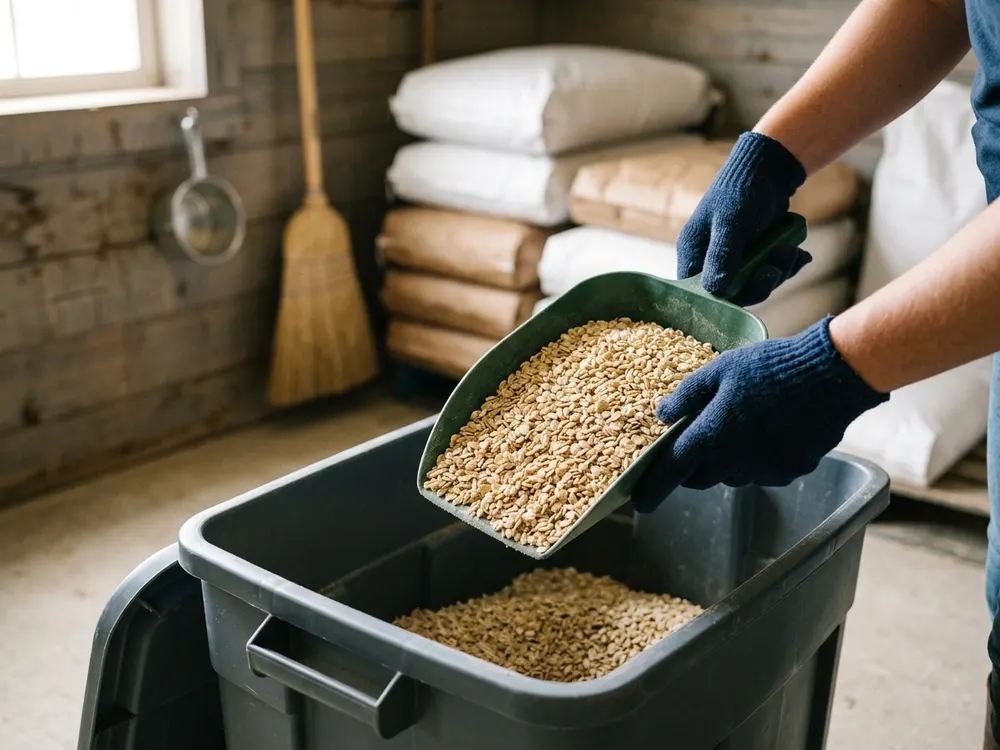
Barley
Can be used in formulated horse diets
- Why it matters
- Usually requires processing for digestibility and careful ration balancing.
- Serving guidance
- Feed barley only as an appropriately processed component of a formulated ration, with quantities set for body condition and exercise; avoid abrupt increases.
- What to do if eaten
- Call the veterinarian promptly after accidental access to substantial barley quantities. Do not wait for obvious colic or sore-footedness to develop.
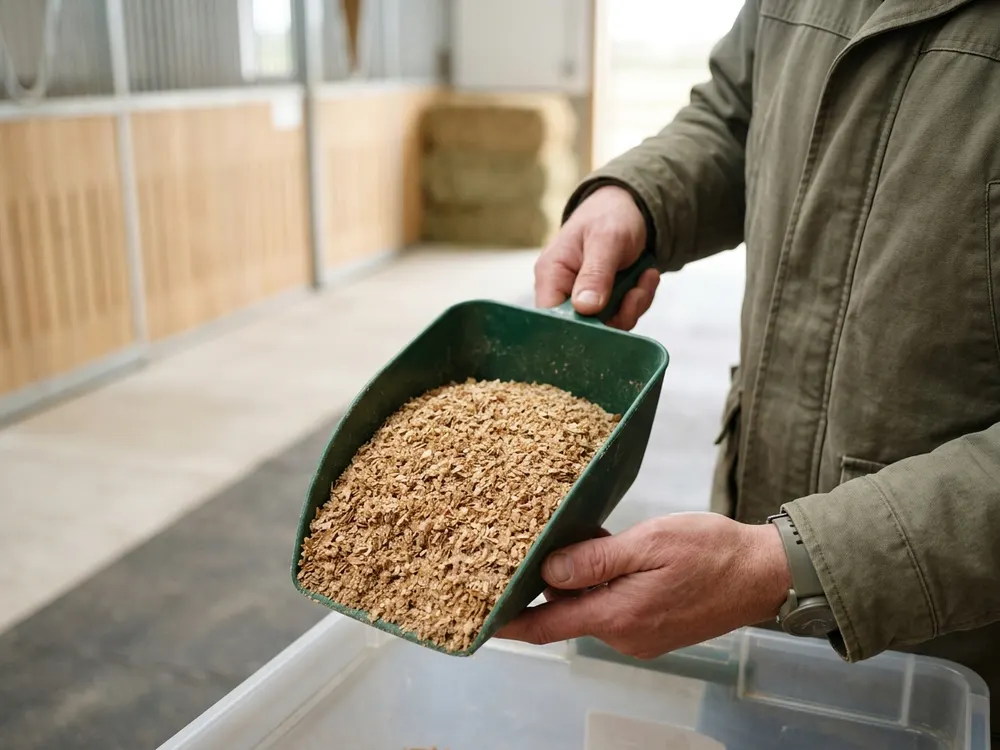
Wheat Bran
Not a complete feed
- Why it matters
- Frequent large unbalanced servings can disrupt mineral balance. Do not rely on traditional bran mashes as a cure-all.
- Serving guidance
- Avoid routine large wheat-bran mashes as a replacement for a balanced feed; bran can disturb the calcium-to-phosphorus balance when overused.
- What to do if eaten
- If bran causes significant diarrhea or a horse has been receiving excessive amounts long-term, have the complete ration reviewed with a veterinarian.
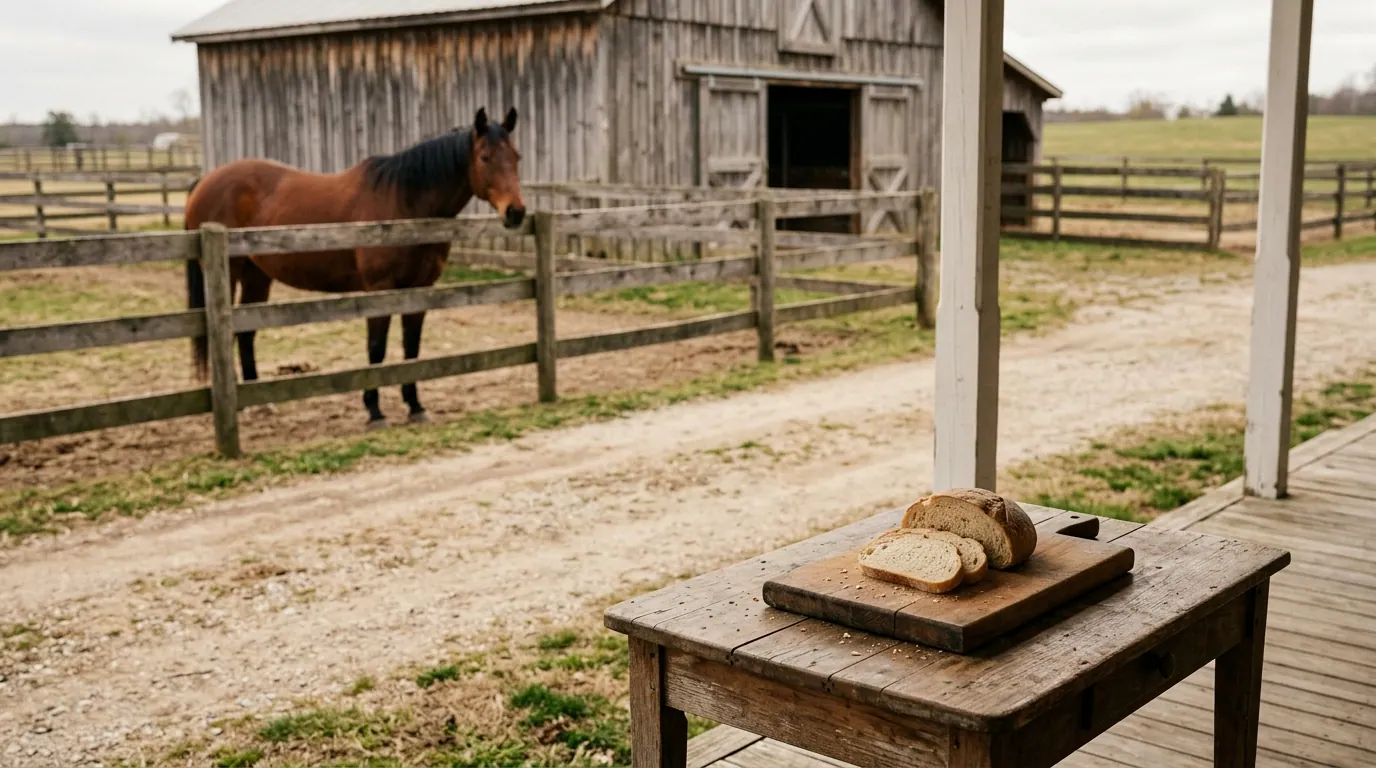
Bread
Not toxic in small plain amounts but not useful horse nutrition
- Why it matters
- Avoid large quantities and moldy bread; better treats exist.
- Serving guidance
- Bread is not needed in an equine diet. Skip loaves and dough; if a horse gets a tiny accidental bite, do not make bread a regular treat.
- What to do if eaten
- Seek veterinary help after large bread consumption or any signs of choke, abdominal pain or reduced manure output.
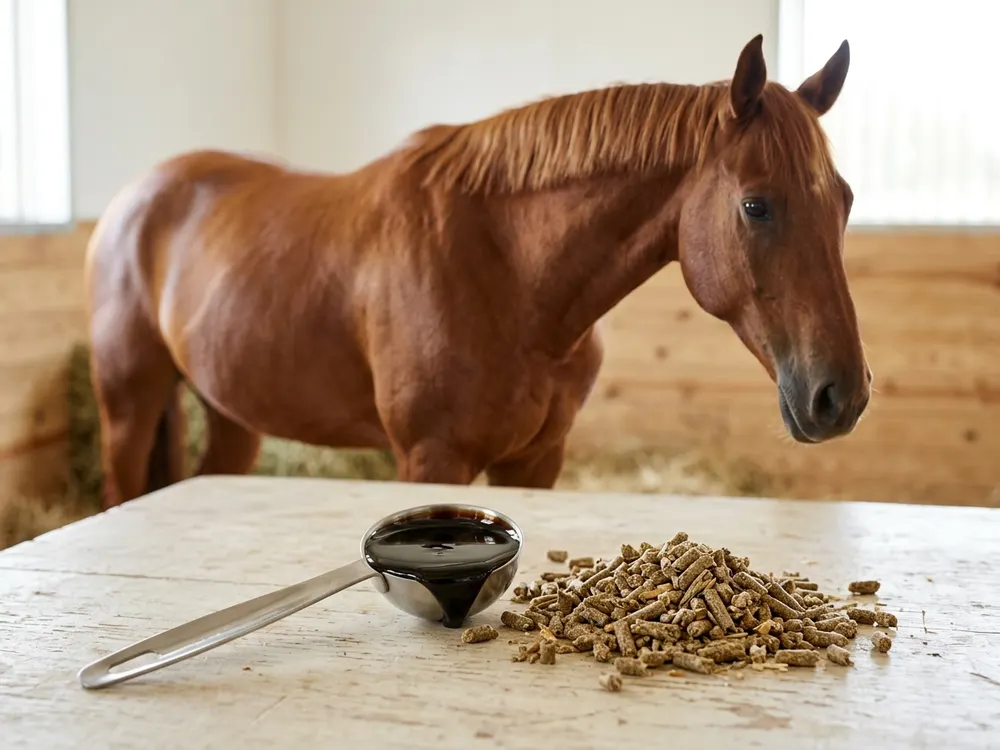
Molasses
Palatable but sugar-dense
- Why it matters
- Often present in feeds; limit extra sugar in insulin-dysregulated or overweight horses.
- Serving guidance
- Account for molasses already present in commercial feed before adding more. Avoid extra sugary toppings for horses with insulin dysregulation or laminitis risk.
- What to do if eaten
- If a horse with metabolic disease gets into a molasses container, contact its veterinarian for an individualized plan and watch for digestive upset.
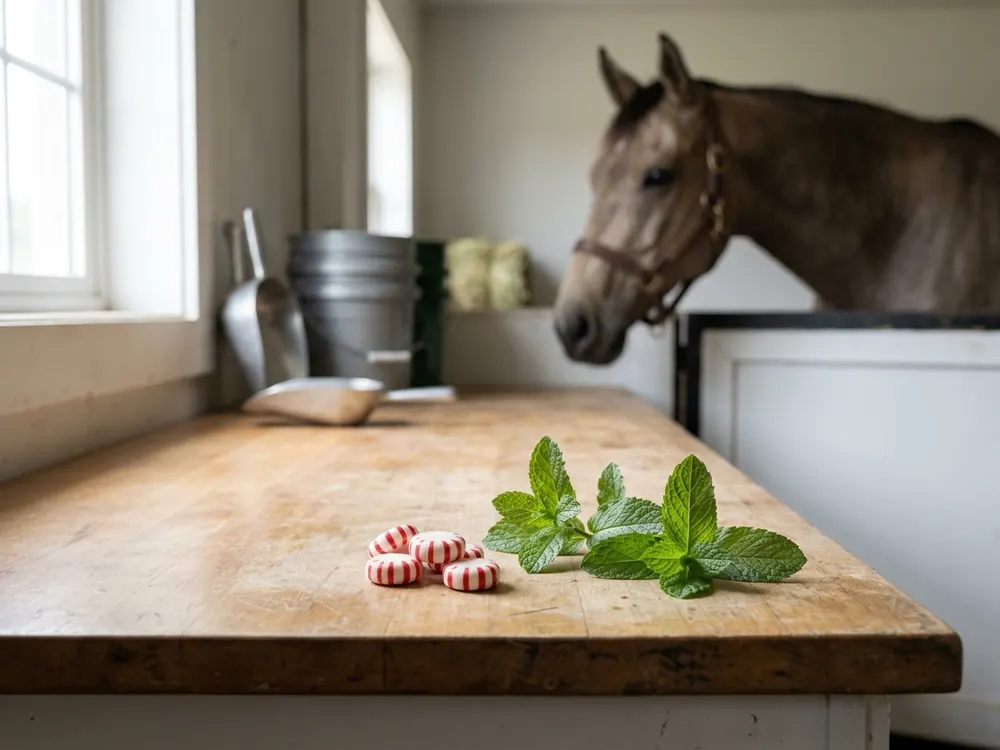
Peppermint Candy
A tiny occasional treat only
- Why it matters
- High sugar; avoid sugar-free products with unfamiliar sweeteners and do not feed by the handful.
- Serving guidance
- If you choose to give peppermint, offer only an occasional single small piece with a simple, checked ingredient list; avoid giving sugary candy to metabolic-risk horses.
- What to do if eaten
- If a horse consumes a bag of sweets or wrappers, note ingredients and quantities and seek veterinary guidance; wrappers can create additional hazards.
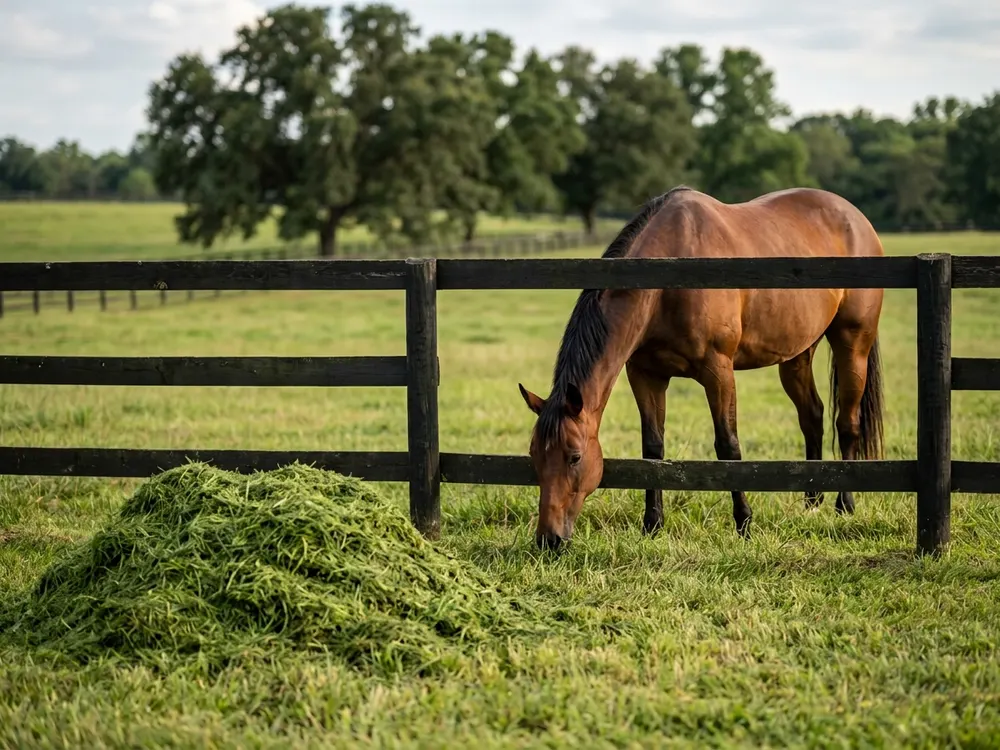
Lawn Clippings
Do not feed piles of lawn clippings
- Why it matters
- Clippings can ferment rapidly and horses may bolt them, increasing digestive and choke risk. Grazing standing pasture is different.
- Serving guidance
- Never offer mower clippings. Rapid fermentation, contamination and the ease of bolting large mouthfuls make them unlike safely grazed pasture.
- What to do if eaten
- Remove clippings immediately. If the horse ate a heap, call the veterinarian, especially if it sweats, rolls, stops eating or seems bloated.
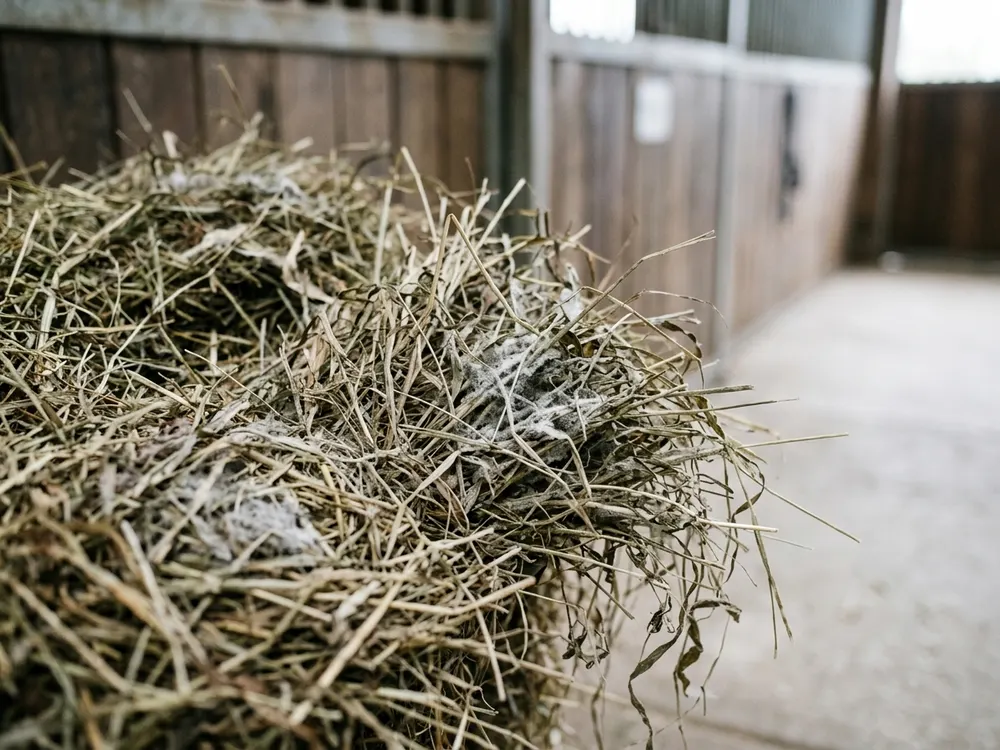
Moldy or Dusty Hay
Do not feed
- Why it matters
- Mold and excessive dust can harm respiratory and digestive health. Discard questionable forage.
- Serving guidance
- Discard moldy, musty or dusty hay rather than trying to mix it with good forage. Store replacement bales off the ground and protected from moisture.
- What to do if eaten
- Stop exposure and contact a veterinarian if the horse coughs, wheezes, has nasal discharge or shows colic after eating questionable hay.
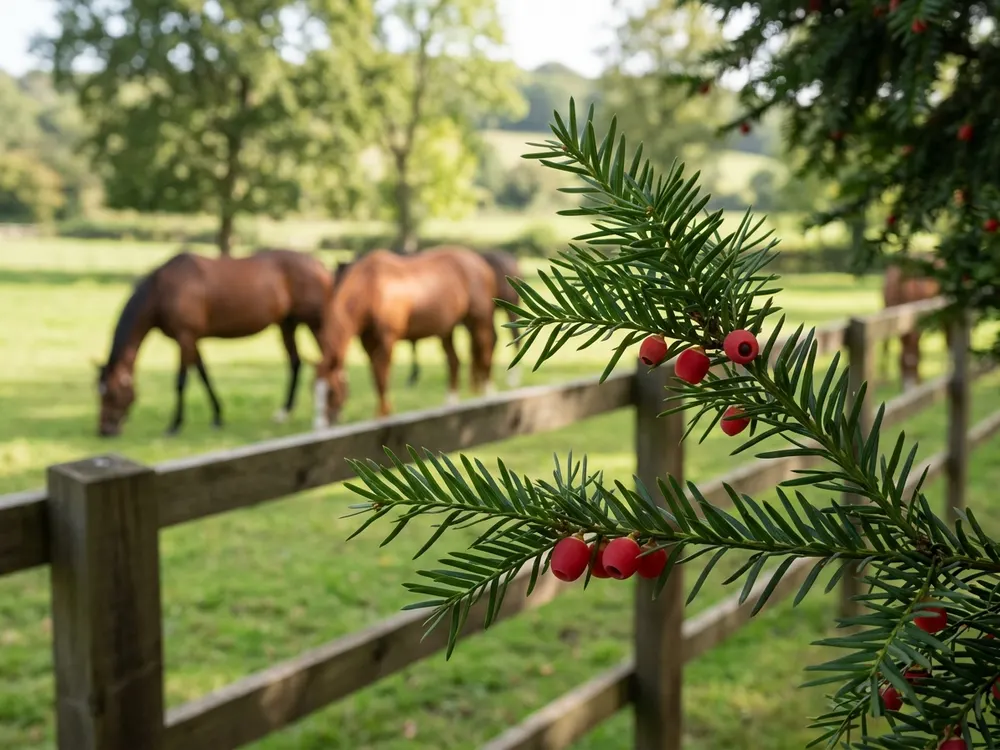
Yew
Highly toxic emergency
- Why it matters
- Even small amounts can be fatal. Remove access and contact a veterinarian immediately after suspected ingestion.
- Serving guidance
- Keep yew hedges, needles and garden trimmings completely out of paddocks; even small amounts may be rapidly fatal. Do not use yew as fence-line greenery.
- What to do if eaten
- Emergency: call an equine veterinarian immediately after any suspected yew ingestion; do not wait for symptoms or attempt home treatment.
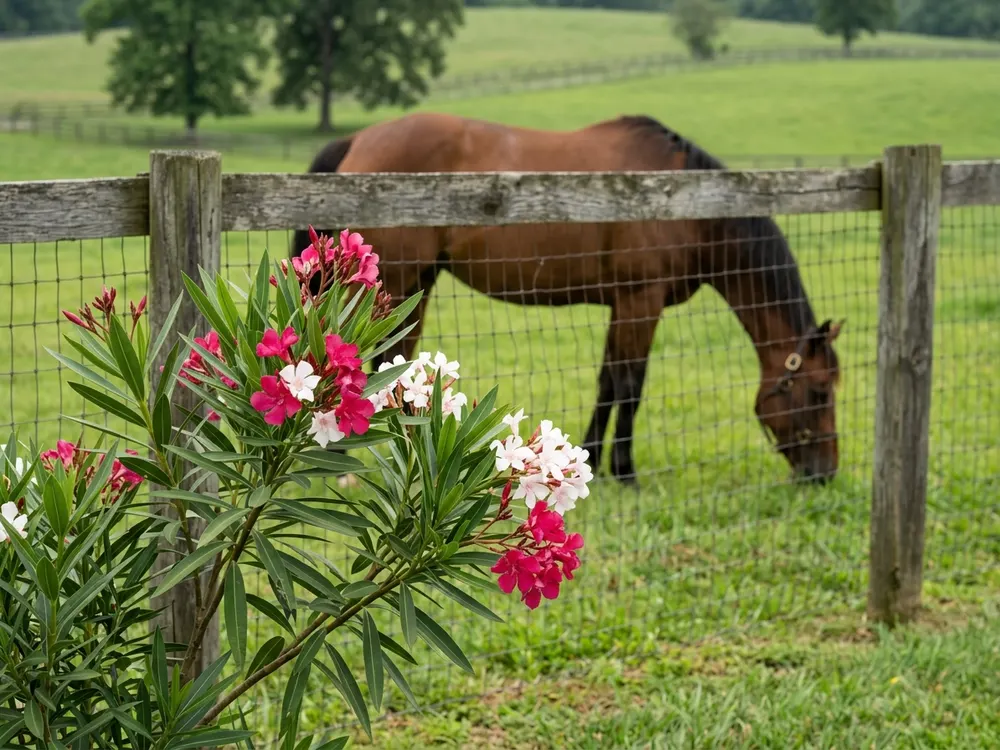
Oleander
Highly toxic
- Why it matters
- All parts are dangerous. Suspected ingestion requires urgent veterinary help.
- Serving guidance
- Do not plant oleander within reach of horses, and never dispose of its branches in manure piles or pastures. Both fresh and dried leaves are dangerous.
- What to do if eaten
- Treat suspected oleander ingestion as a veterinary emergency because of possible life-threatening heart effects. Keep a safe plant sample for identification.
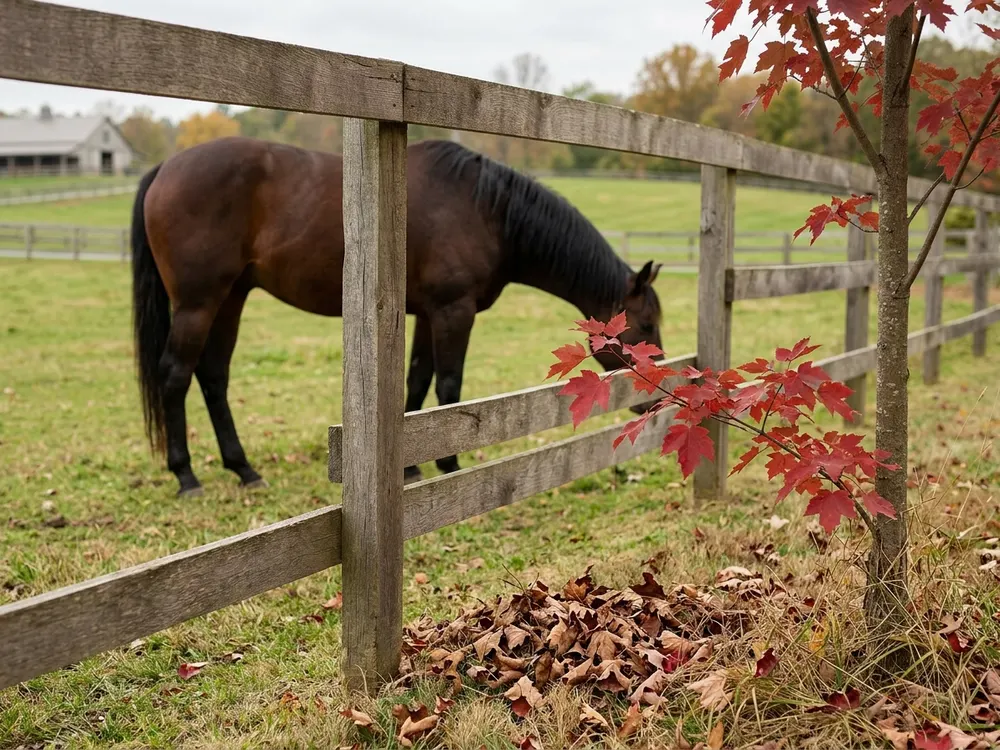
Wilted Red Maple Leaves
Dangerous to horses
- Why it matters
- Wilted or dried leaves can cause severe red-blood-cell damage. Seek veterinary help after exposure.
- Serving guidance
- Prevent access to wilted or fallen red maple leaves, especially after storms, pruning or autumn leaf drop; identify nearby trees and clear affected areas.
- What to do if eaten
- Call the veterinarian urgently if wilted red maple leaves may have been eaten. Weakness, dark urine and pale or yellow gums can indicate serious poisoning.
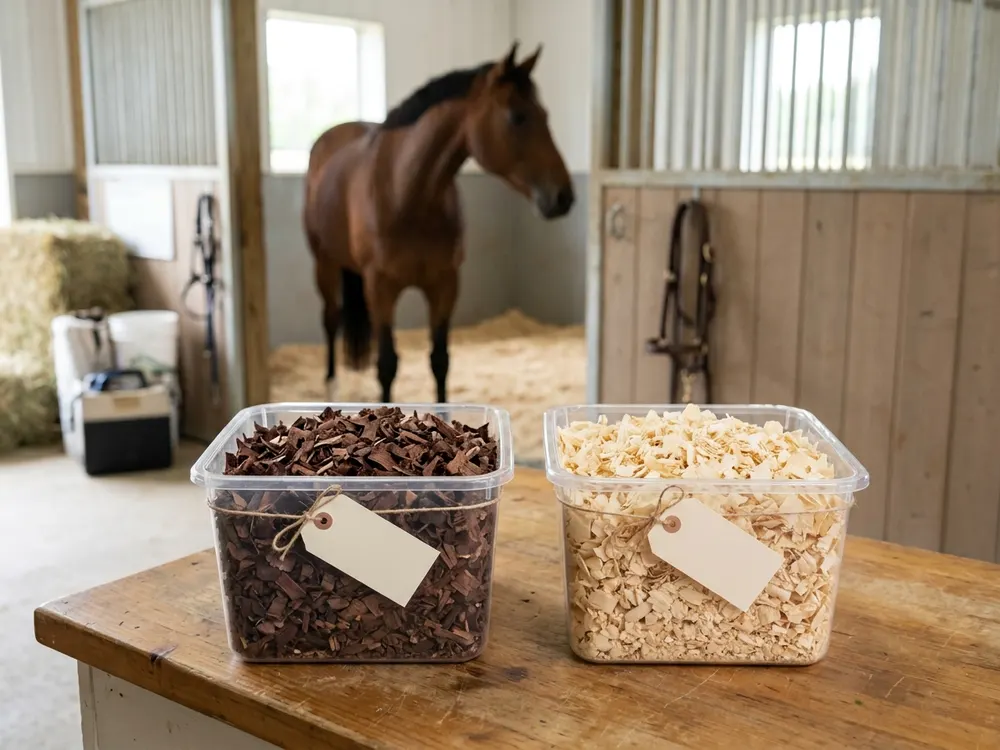
Black Walnut Shavings
Unsafe bedding for horses
- Why it matters
- Exposure can trigger laminitis and limb swelling. Remove the horse and contact a veterinarian if exposure is suspected.
- Serving guidance
- Never use bedding containing black walnut shavings in horse stalls. Verify the wood species before accepting mixed sawdust deliveries.
- What to do if eaten
- Remove the horse from suspect bedding and contact the vet promptly if hooves become hot, movement turns stiff or laminitis signs emerge.
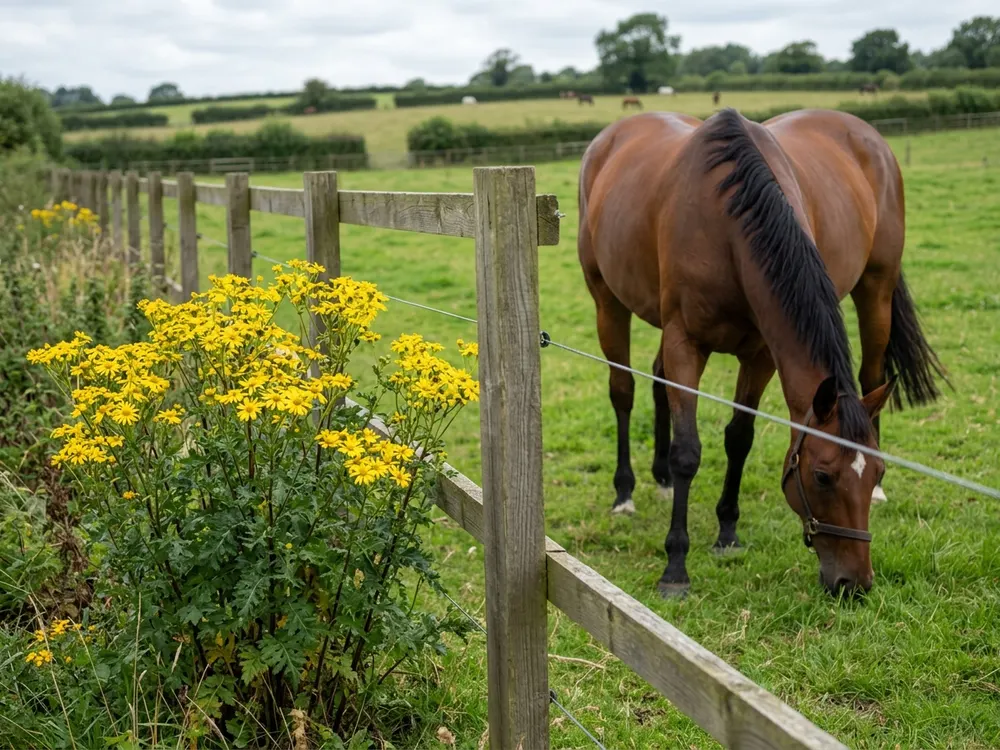
Ragwort / Groundsels
Toxic, including when dried in hay
- Why it matters
- Chronic exposure can cause serious liver damage. Control plants and inspect hay.
- Serving guidance
- Remove ragwort before seeding and keep dried plants out of hay; toxins remain a risk after cutting. Wear gloves and follow local disposal recommendations.
- What to do if eaten
- If ragwort exposure is suspected, arrange a veterinary assessment of possible cumulative liver injury; early signs may be subtle.
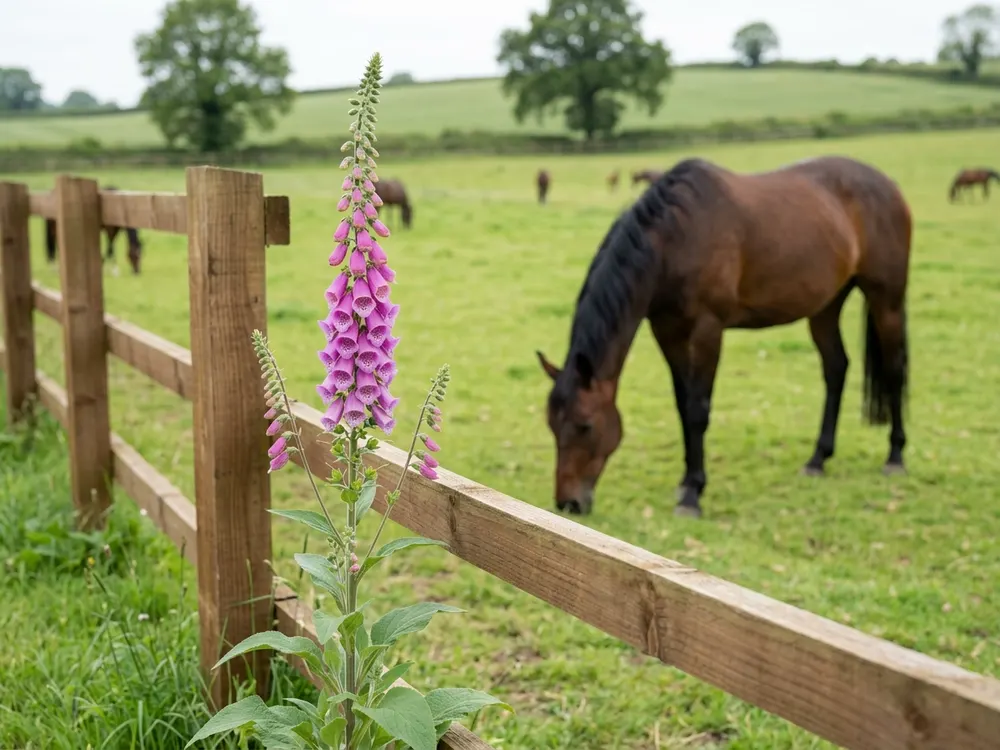
Foxglove
Toxic
- Why it matters
- Cardiac glycosides can cause life-threatening poisoning.
- Serving guidance
- Exclude foxglove from paddocks and baled forage. Ornamental garden plants and discarded cuttings should never be accessible to horses.
- What to do if eaten
- Seek emergency veterinary care after any suspected ingestion; foxglove cardiac glycosides can trigger dangerous heart rhythms.
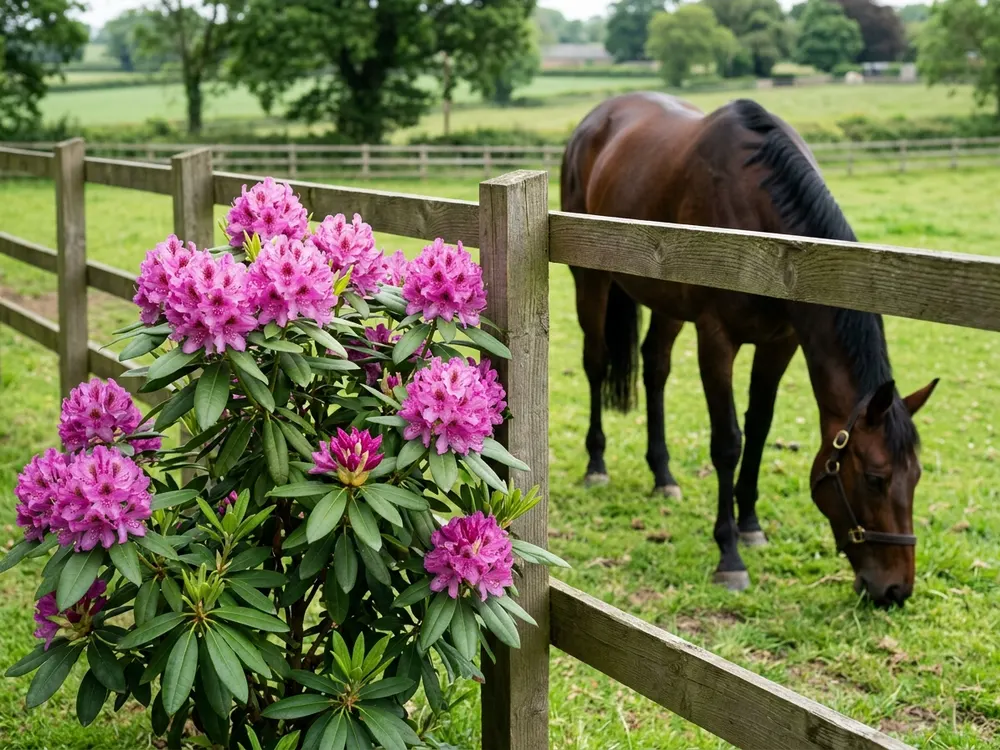
Rhododendron / Azalea
Toxic
- Why it matters
- Ingestion can cause serious gastrointestinal and cardiovascular signs.
- Serving guidance
- Keep rhododendron and azalea leaves, flowers and trimmings outside grazing areas, including compost piles along the fence.
- What to do if eaten
- Call a veterinarian urgently if exposure is possible, particularly with drooling, weakness, colic or an abnormal heartbeat.
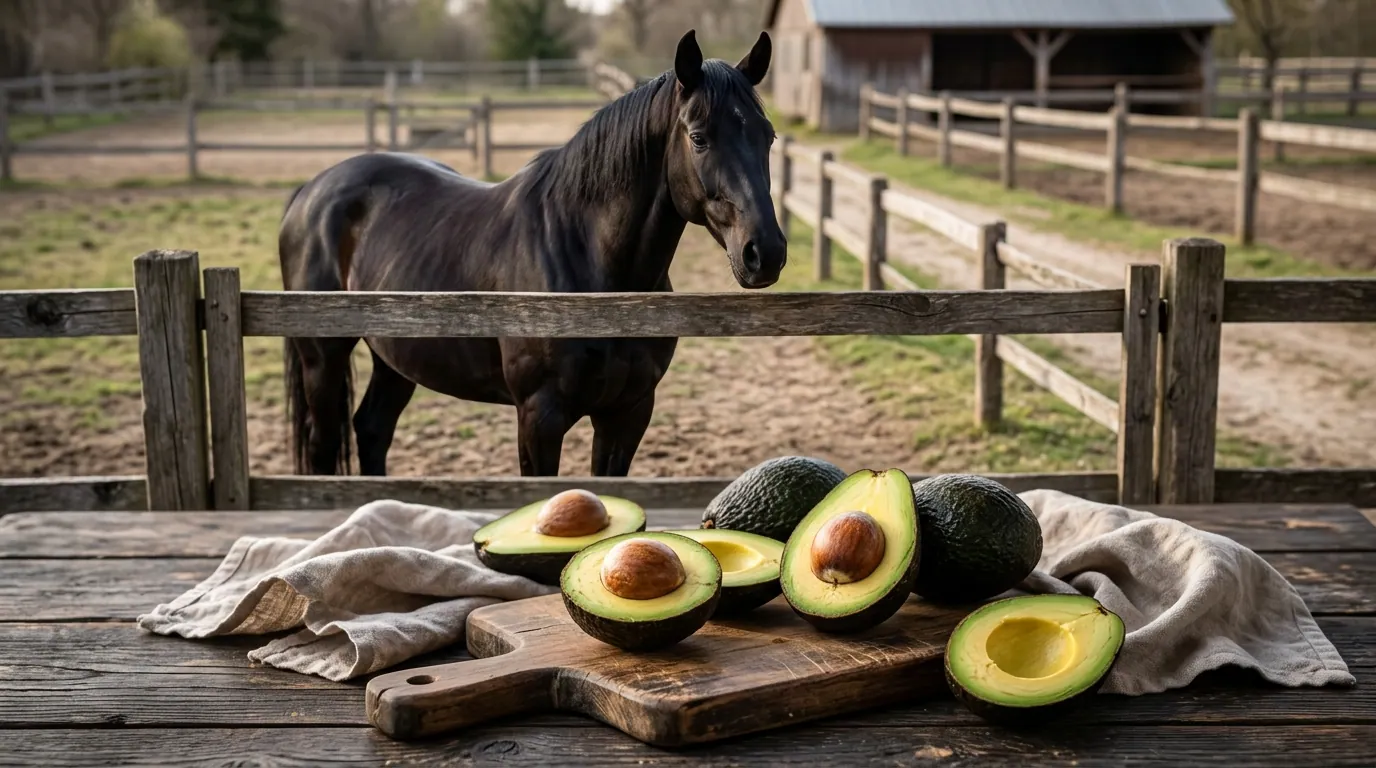
Avocado
Best treated as unsafe for horses
- Why it matters
- Leaves, bark, seed and fruit contain persin and have been associated with toxicity in large animals.
- Serving guidance
- Do not deliberately feed avocado fruit, pits, peel or foliage to horses; risk varies by plant material, and the safest policy is complete avoidance.
- What to do if eaten
- If avocado leaves or other parts were eaten, document what and how much and call the vet, especially for breathing trouble, swelling or colic.
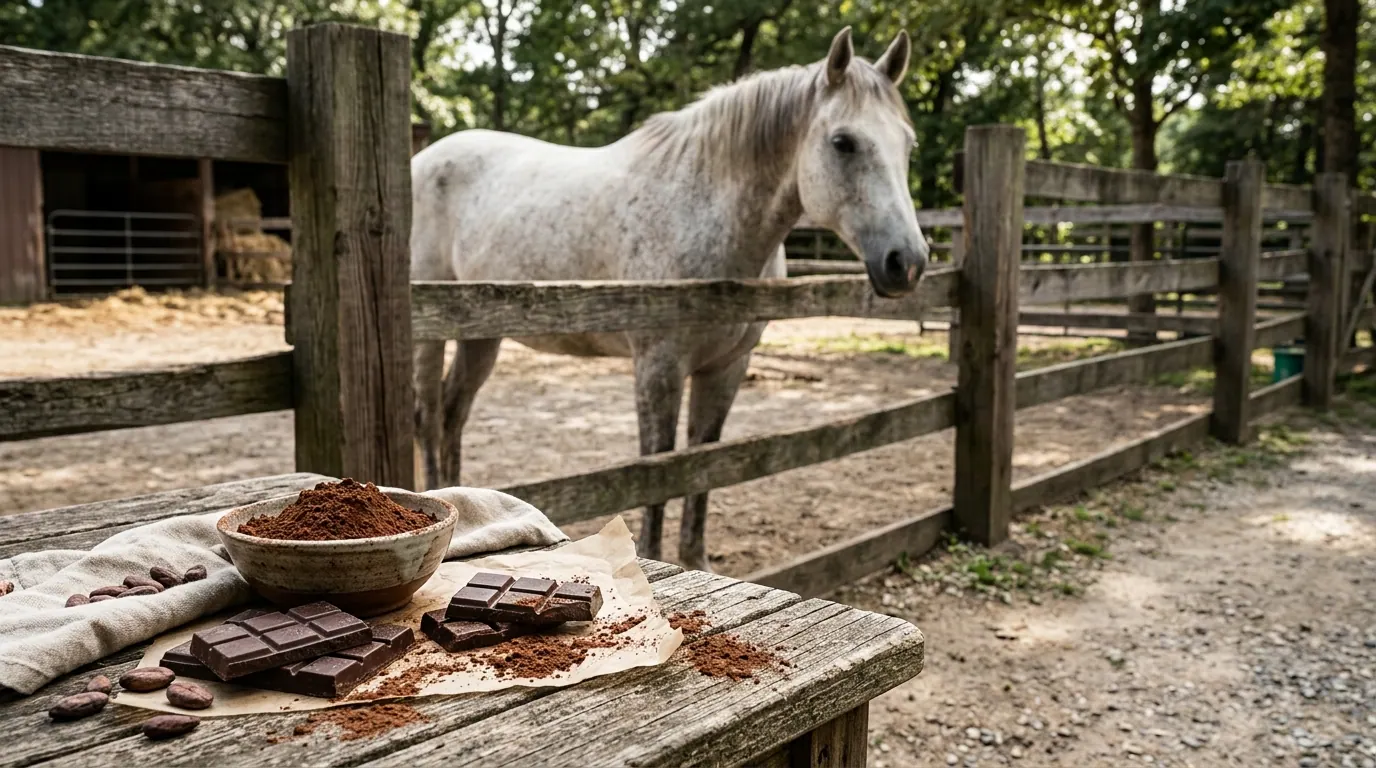
Chocolate / Cocoa
Do not feed
- Why it matters
- Contains methylxanthines and is not an appropriate horse treat.
- Serving guidance
- Keep cocoa powder, chocolate bars and baked cocoa treats away from feed storage; neither caffeine nor theobromine belongs in horse treats.
- What to do if eaten
- Contact a veterinarian after meaningful cocoa or chocolate ingestion and share the product label; restlessness, rapid heart rate and colic require attention.
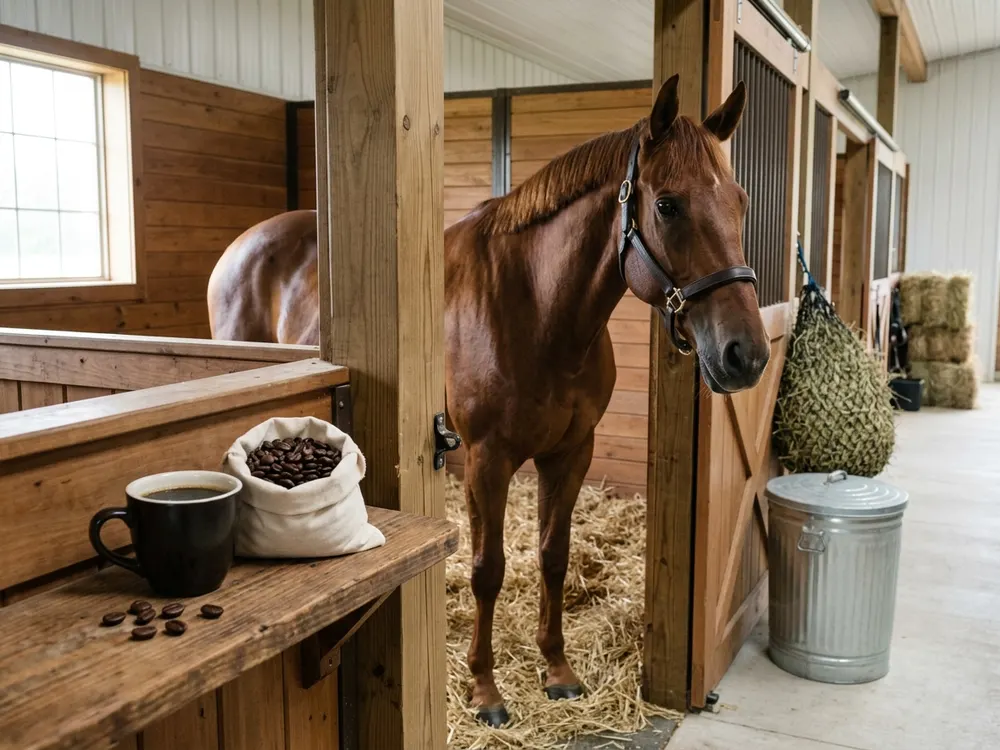
Coffee / Caffeine
Do not feed
- Why it matters
- Caffeine is a stimulant and may also violate competition medication rules.
- Serving guidance
- Keep coffee beans, grounds, energy products and caffeinated drinks away from horses. Used coffee grounds are not suitable feed or bedding additives.
- What to do if eaten
- Call the vet after caffeine exposure and explain the form and approximate dose; agitation, trembling or rapid heartbeat are concerning.
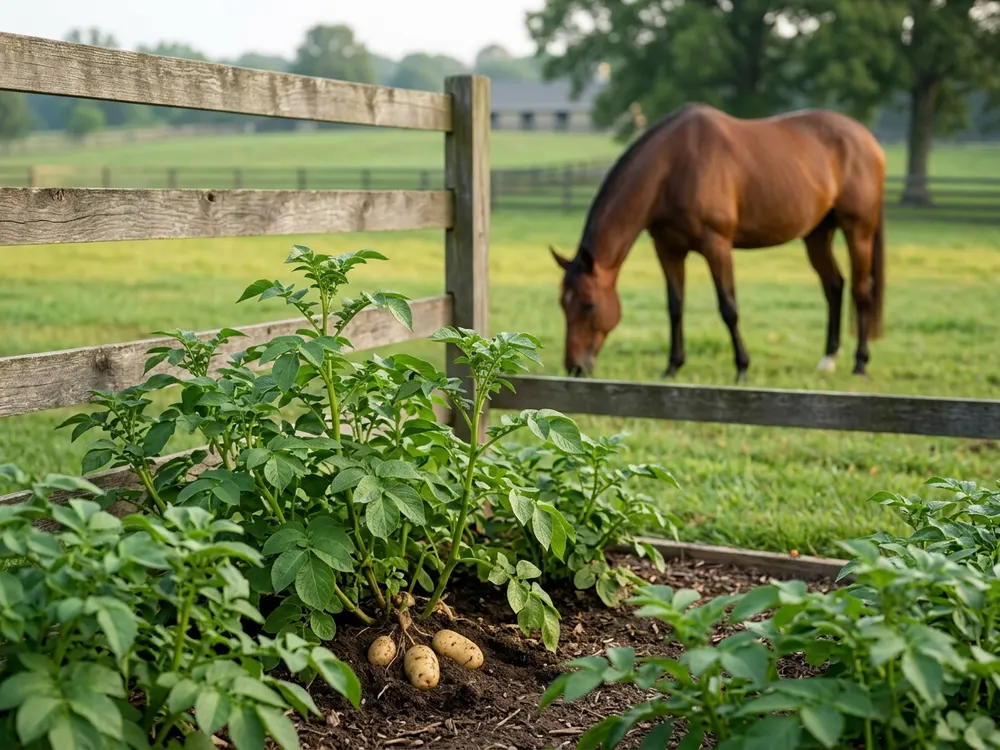
Green Potato / Potato Plant
Avoid
- Why it matters
- Nightshade plant parts and green potatoes can contain toxic glycoalkaloids.
- Serving guidance
- Block access to green potato skins, sprouts, foliage and garden waste; never feed tubers that are green or sprouting.
- What to do if eaten
- Contact a veterinarian if potato greenery or green tubers were eaten; digestive or neurological symptoms need prompt evaluation.
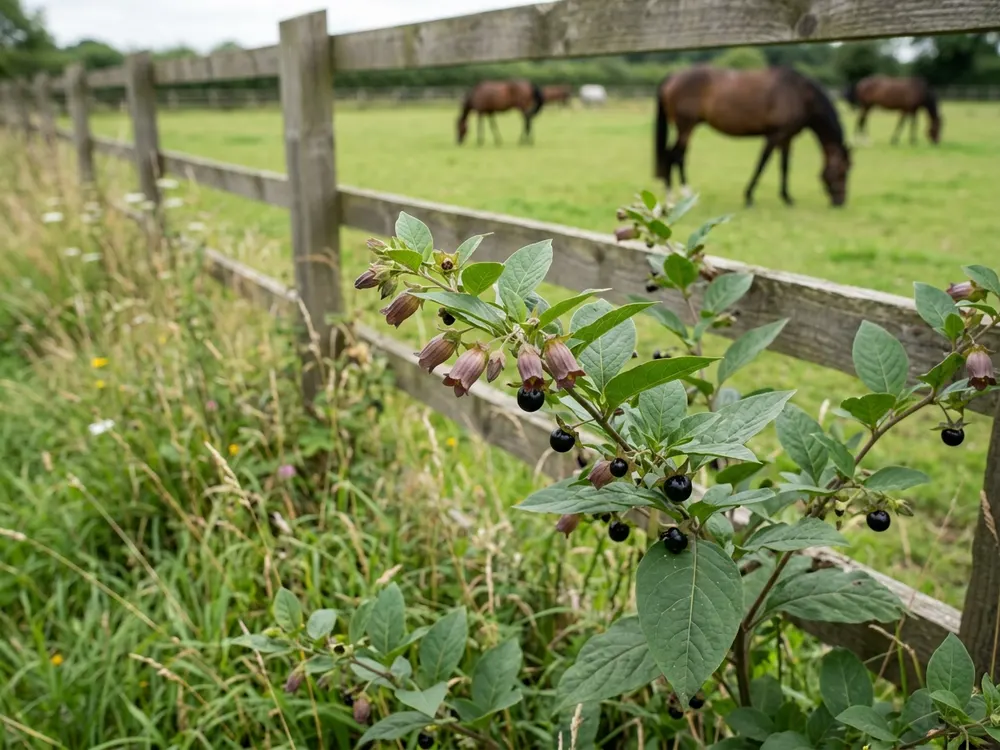
Nightshade Plants
Toxic
- Why it matters
- Prevent access and seek veterinary guidance after suspected ingestion.
- Serving guidance
- Identify nightshade weeds in grazing land and hay fields; remove plants safely and never offer unknown berries or leaves as treats.
- What to do if eaten
- Get urgent veterinary advice for suspected nightshade ingestion; photograph or retain the plant safely to aid identification.
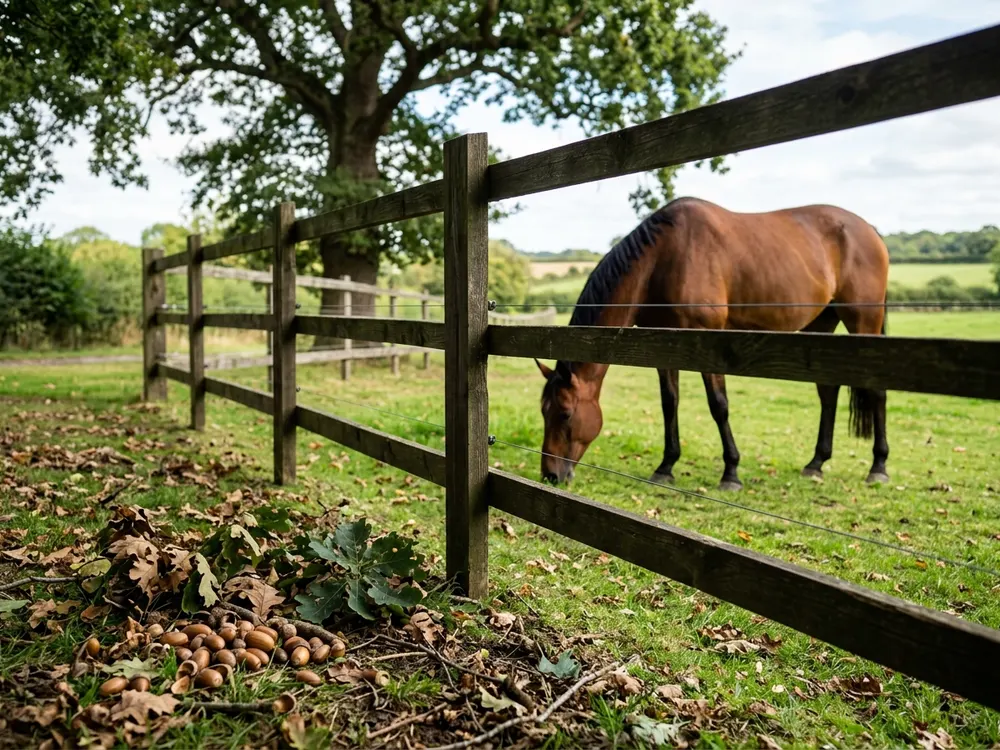
Acorns / Oak
Potentially harmful in quantity
- Why it matters
- Heavy intake can cause digestive and kidney problems. Reduce access during mast years and call a vet if signs develop.
- Serving guidance
- Limit access to oak-heavy paddocks during heavy acorn fall and remove piles from feeding areas. Do not deliberately offer acorns or oak leaves.
- What to do if eaten
- If many acorns were eaten or colic, constipation or dark urine occurs, contact a veterinarian promptly because serious kidney and gut injury is possible.
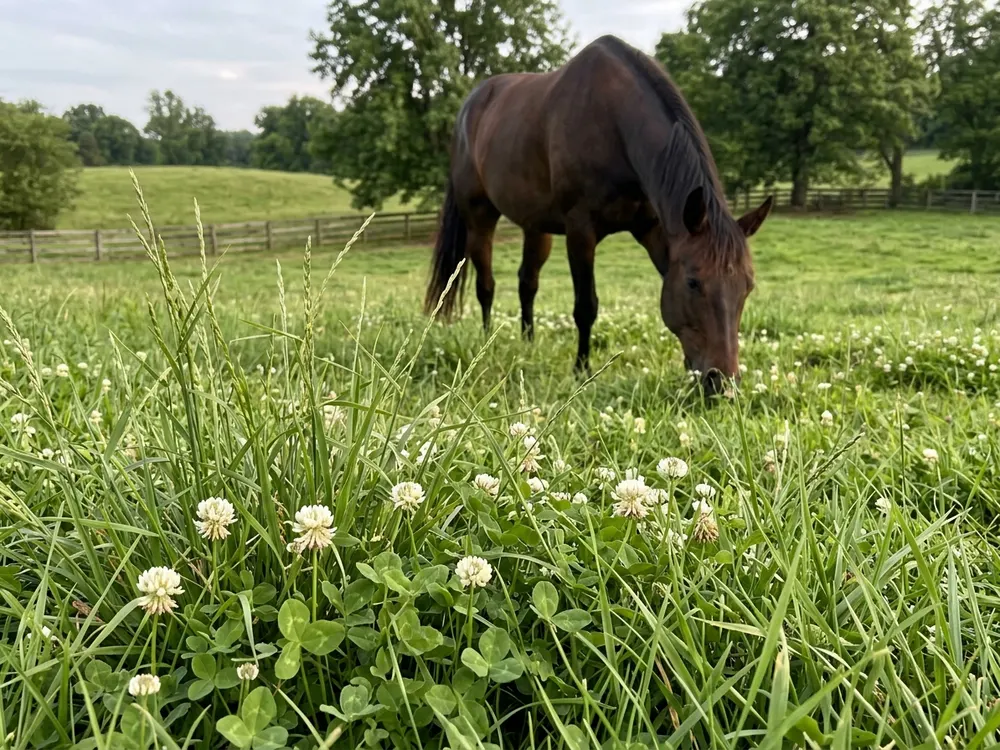
Clover
Can be useful pasture but species and conditions matter
- Why it matters
- Some clovers can contribute to slobbers or photosensitization; pasture identification and management matter.
- Serving guidance
- Check pasture clover for black-patch disease, excessive salivation episodes and mold. Mixed pasture may be fine, but clover should not displace a balanced forage plan.
- What to do if eaten
- Persistent drooling after grazing clover calls for examining the pasture and speaking with a veterinarian; difficulty swallowing or colic needs prompt care.
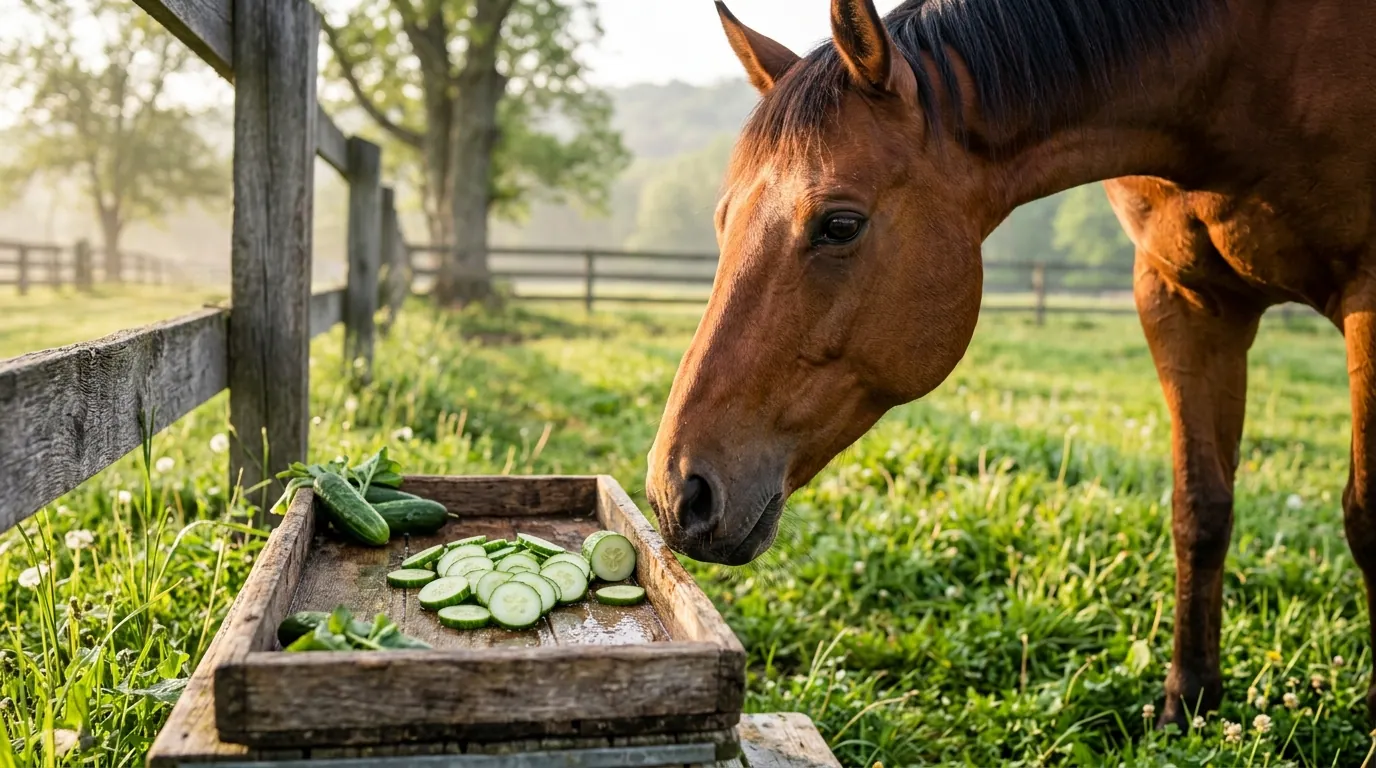
Cucumber
Generally safe in small pieces
- Why it matters
- Wash thoroughly, remove spoiled parts, and slice into manageable pieces to reduce choking risk.
- Serving guidance
- Peel only if necessary; thoroughly rinse the skin and offer a few crisp, thin half-moon slices. Skip pickles, salty brines and heavily seasoned cucumber salads.
- What to do if eaten
- If large uncut cucumber pieces cause gagging, repeated swallowing or nasal discharge, stop feeding and call a veterinarian about possible choke.
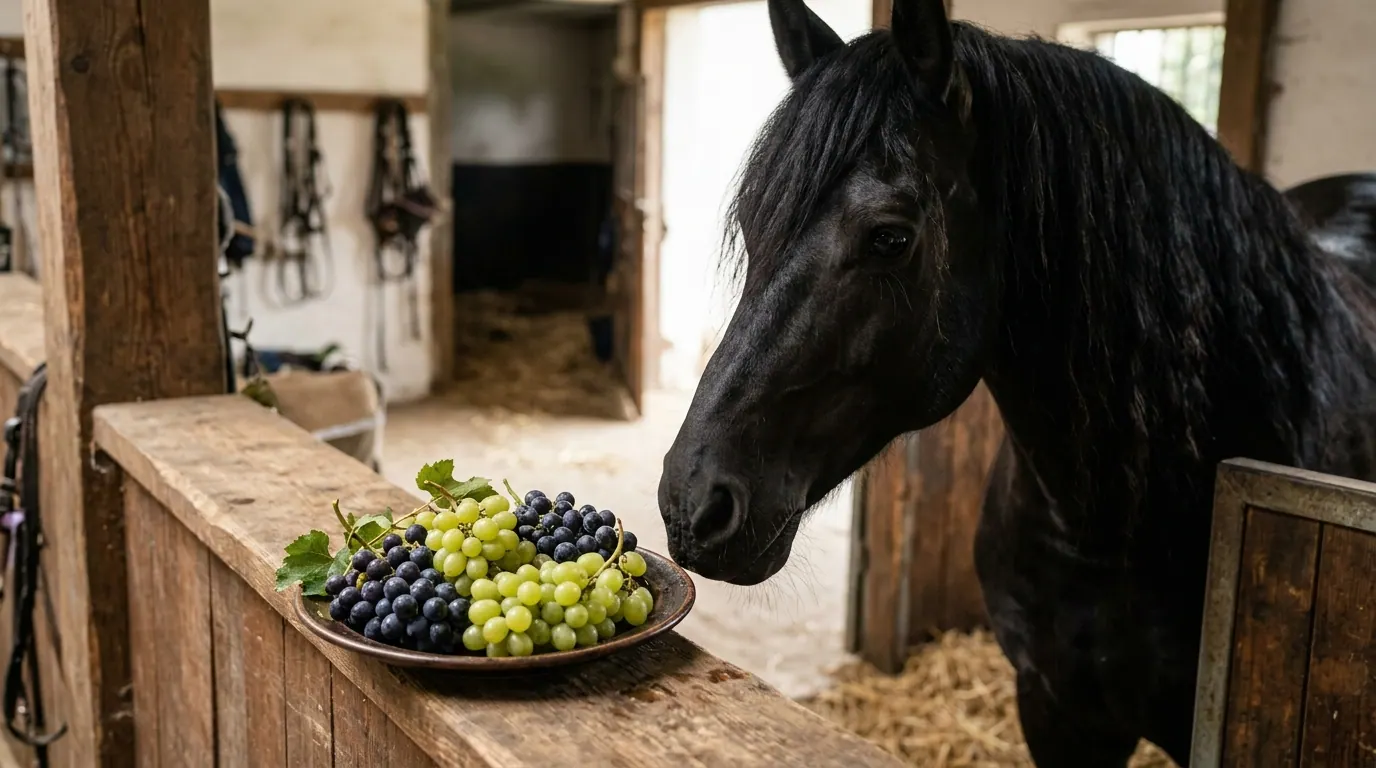
Grapes
Occasional treat for otherwise healthy horses
- Why it matters
- Wash and offer only a few, halved for horses prone to swallowing treats whole. The canine grape-toxicity warning cannot simply be applied to horses.
- Serving guidance
- Rinse fresh grapes and offer just a few as an occasional treat; halve larger grapes for horses that gulp food. Avoid raisins as a routine sugary snack.
- What to do if eaten
- After substantial grape consumption, watch for digestive upset and consult your vet if the horse develops colic, diarrhea or unusual behavior.
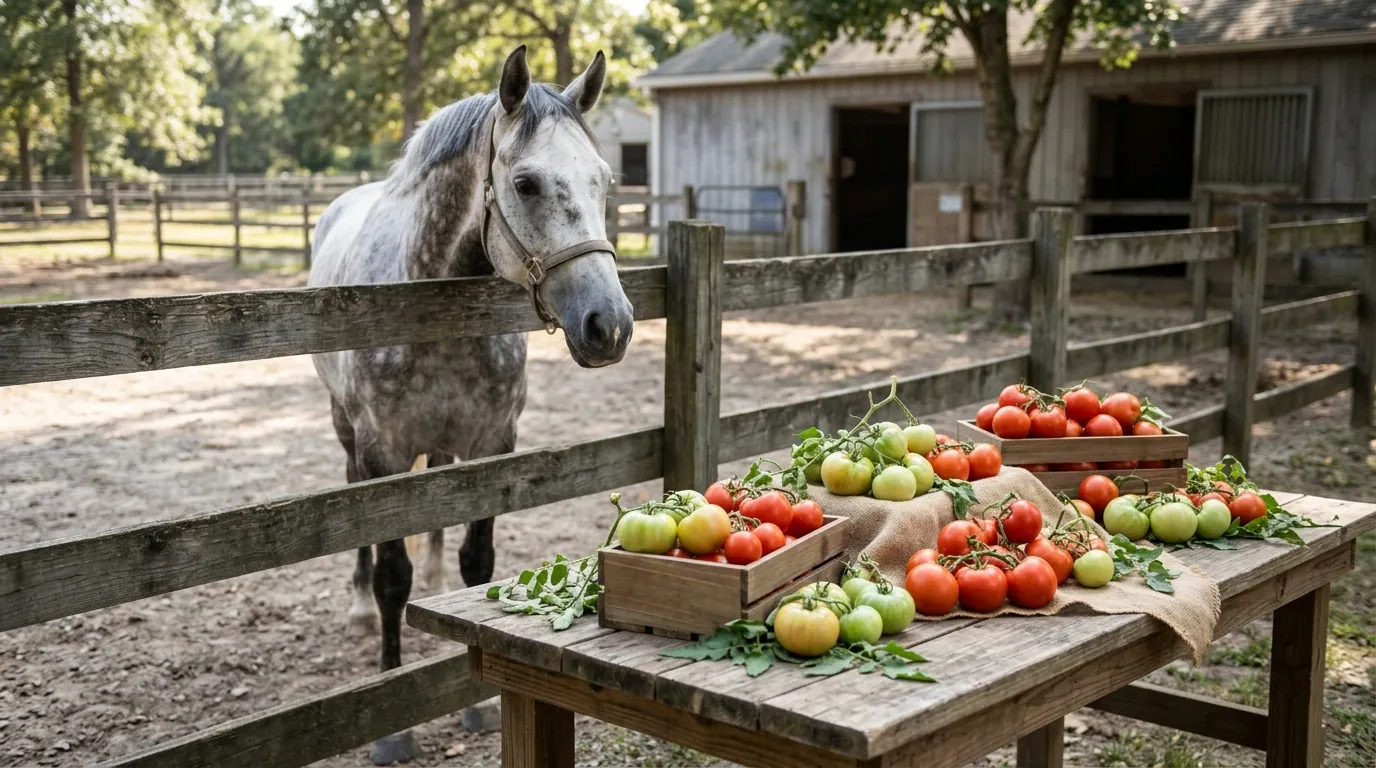
Tomatoes
Avoid feeding tomatoes or any part of the tomato plant
- Why it matters
- Tomato foliage and green plant parts contain harmful nightshade alkaloids; veterinarians and university extension sources advise avoiding tomatoes as horse treats.
- Serving guidance
- Do not use tomatoes as horse treats, and fence off tomato vines, leaves and garden trimmings. Green plant parts carry particular toxicological concern.
- What to do if eaten
- If the horse browsed tomato foliage or unripe plant material, contact the veterinarian promptly and estimate the amount; do not try to induce vomiting.
No matching items found.